A Bank Born in the Shadow of the Black Death
In 1397, a Florentine cloth merchant named Giovanni di Bicci de' Medici opened a modest banking operation in Rome. The timing was significant. Europe was still recovering from the catastrophic Black Death of 1348, which had killed roughly a third of the continent's population and profoundly disrupted its economic structures. The devastation created both danger and opportunity; labor was scarce, land was cheap, and the survivors often found themselves inheriting fortunes from multiple dead relatives. The demand for financial services; money transfers, currency exchange, credit; was surging just as the old banking houses were struggling to recover from plague-related losses.[^1]
Giovanni was not the first Medici to enter banking. His distant cousin Vieri di Cambio de' Medici had operated a successful bank earlier in the century. But Giovanni possessed a combination of qualities that would prove decisive: meticulous attention to accounting, a talent for cultivating powerful clients, and; crucially; a temperament that favored discretion over ostentation. "Stay out of the public eye," he reportedly advised his sons, a counsel that reflected both personal inclination and hard-won political wisdom in a republic where conspicuous wealth invited envy and suspicion.[^2]
Giovanni's masterstroke was securing the account of the Roman Curia; the administrative apparatus of the papacy. The papal account was the most lucrative prize in European banking. The Church collected revenues from across Christendom; tithes, annates, indulgences, fees for ecclesiastical appointments; and needed a reliable institution to transfer these vast sums from distant dioceses to Rome. By 1402, Giovanni had established the Medici Bank's Roman branch as the primary banker to Pope Boniface IX, a relationship that would underpin the bank's prosperity for nearly a century.

The Architecture of Innovation
The Medici Bank did not invent double-entry bookkeeping; that distinction belongs to the Italian merchants of the 13th and 14th centuries, with the system codified by Luca Pacioli in 1494. But the Medici Bank was among the most sophisticated practitioners of the technique, and its surviving records reveal an accounting system of remarkable precision. Every transaction was recorded in two places; as a debit in one account and a credit in another; creating an internal check that made errors and fraud far easier to detect. The bank maintained multiple sets of books: the Libro Segreto (secret book), which recorded the partners' capital accounts and profit distributions; the Libro di Entrata e Uscita (book of income and expenditure); and detailed ledgers for each branch.[^3]
The bank's most consequential innovation, however, was its approach to the problem that haunted all medieval finance: the Church's prohibition of usury. Canon law, drawing on Aristotle and scripture, held that charging interest on a loan was a mortal sin. Money, the theologians argued, was sterile; it could not breed. To demand that a borrower return more than he had received was to charge for the mere passage of time, which belonged to God alone.
This prohibition posed an obvious difficulty for bankers, who could hardly operate without earning a return on the capital they deployed. The Medici solution, refined over decades, was the bill of exchange (lettera di cambio). In its simplest form, a bill of exchange was a written order by which a party in one city instructed its correspondent in another city to pay a specified sum in local currency to a designated recipient. The transaction involved two currencies and two locations. The crucial insight was that the exchange rate between the two currencies could be set to include a hidden premium; a "discretionary gift" (discrezione) that functioned as interest without technically being interest. Because the transaction involved a genuine exchange of currencies across distance, it could be argued; and the Medici argued vigorously; that the profit arose from the exchange service itself, not from the lending of money.[^4]
This was not mere sophistry. The bills of exchange involved real currency risk, since exchange rates fluctuated, and the outcome was not guaranteed. A banker might occasionally lose money on a particular transaction. The element of uncertainty, the theologians conceded, distinguished the bill of exchange from a straightforward loan at interest. The distinction was debated throughout the Renaissance, but in practice, the system worked. The Medici and their fellow bankers transferred enormous sums across Europe, earned reliable profits, and maintained at least a veneer of compliance with canon law.
The Holding Company: A Structure Ahead of Its Time
Perhaps the Medici Bank's most enduring structural innovation was its organization as what we would now call a holding company. Rather than operating as a single entity, the bank consisted of a series of legally separate partnerships, each governed by its own contract (contratto di società). The central partnership in Florence; controlled by the Medici family; held majority stakes in each branch partnership. Branch managers were minority partners who shared in profits and losses, giving them a powerful incentive to manage prudently.[^5]
This structure served multiple purposes. It limited liability: if the London branch failed, its debts would not automatically destroy the Rome branch. It aligned incentives: branch managers who stood to lose their own capital alongside the Medici's were far less likely to make reckless loans. And it provided a mechanism for succession, as partnerships could be dissolved and reconstituted with new partners without disrupting the overall enterprise.
| Branch | Established | Key Manager | Primary Business |
|---|---|---|---|
| Rome | 1397 | Various | Papal banking, currency exchange |
| Venice | 1402 | Giovanni d'Orsino Lanfredini | Trade finance, Eastern commerce |
| Naples | 1400 | Adopt. d'Adoardo Giachinotti | Royal lending, grain trade |
| Geneva/Lyon | 1420 | Francesco Sassetti | Fair banking, trade credit |
| Bruges | 1439 | Angelo Tani, Tommaso Portinari | Wool trade, English commerce |
| London | 1446 | Gerozzo de' Pigli, Canigiani | Wool export, royal lending |
| Avignon | 1446 | Giovanni Zampini | Papal revenue collection |
| Milan | 1452 | Pigello Portinari | Sforza lending, silk trade |
The structure bore a striking resemblance to modern multinational corporations and anticipated the holding company model that would not become common for another four centuries. As Raymond de Roover observed, the Medici were essentially operating a diversified financial conglomerate long before the concept had a name.
Cosimo: The Banker Who Ruled Florence
Giovanni di Bicci died in 1429, leaving the bank to his elder son, Cosimo de' Medici. Under Cosimo's stewardship, the Medici Bank reached its zenith. Between 1420 and 1450, the bank's total profits exceeded 290,000 florins; an enormous sum in an era when a skilled artisan might earn 30 to 50 florins per year. The Rome branch alone generated roughly 63 percent of total profits during this period, a testament to the extraordinary value of the papal account.[^6]

But Cosimo's significance extended far beyond banking. He demonstrated, more effectively than any figure before him, how financial power could be converted into political control without holding formal office. Florence was nominally a republic, governed by elected magistrates and councils. Cosimo never held the title of prince or duke. Instead, he controlled Florence through a web of patronage, debt, and strategic generosity. He financed public buildings, endowed monasteries, and funded the import of Greek manuscripts. He made loans to allies and called them in from enemies. He ensured that his supporters dominated the committees that selected magistrates for office. As the historian John Najemy has written, Cosimo transformed the Florentine republic into what was effectively a one-man state; a transformation accomplished almost entirely through the deployment of capital rather than force.[^7]
Source: Estimated from de Roover (1963), Libro Segreto analysis
The intertwining of banking and politics carried enormous risks, as later generations of Medici would discover. But under Cosimo, the system functioned with remarkable efficiency. When political rivals engineered his exile from Florence in 1433, the economic disruption was so severe; foreign creditors demanded repayment, trade contracts went unfulfilled, the city's tax revenues plummeted; that Cosimo was recalled within a year. His return demonstrated a principle that would echo through financial history: when a single institution becomes sufficiently embedded in an economy, its failure threatens the entire system. The parallel to the "too big to fail" doctrine that emerged during the 2008 financial crisis is striking, if imperfect.
The Branch Network and Its Vulnerabilities
The Medici Bank's European branch network was both its greatest asset and its most persistent source of risk. Each branch operated semi-autonomously, managed by a local partner who possessed intimate knowledge of regional markets, currencies, and political conditions. This decentralized structure allowed the bank to serve clients across vast distances in an era when a letter from Florence to London could take weeks to arrive.
But decentralization created agency problems that the Medici never fully solved. Branch managers, thousands of miles from oversight, faced constant temptation to exceed their lending authority, extend credit to risky borrowers for personal advantage, or simply skim profits. The problem was most acute at the Bruges and London branches, which operated in the volatile political environment of the Burgundian Netherlands and Lancastrian/Yorkist England.
| Metric | c. 1430 (Peak) | c. 1470 (Decline) |
|---|---|---|
| Number of branches | 11 | 7 |
| Estimated total assets (florins) | 290,000+ | ~100,000 |
| Annual profit, all branches (florins) | ~50,000 | ~10,000 |
| Largest branch by profit | Rome (63%) | Rome (declining) |
| Major sovereign debtors | Papacy | Edward IV, Charles the Bold |
The London branch manager, Gerozzo de' Pigli, and later the Bruges branch manager, Tommaso Portinari, made enormous loans to English and Burgundian monarchs; precisely the kind of sovereign lending that had destroyed the great Florentine banks of the 14th century, the Bardi and Peruzzi, when Edward III of England defaulted on their loans in the 1340s. The Medici were fully aware of this precedent, yet the political and commercial pressures to lend to kings proved irresistible. Edward IV of England borrowed heavily from the Medici to finance his military campaigns during the Wars of the Roses, and when his fortunes declined, much of this debt went unrecovered.
Lorenzo the Magnificent: The Patron Who Nearly Bankrupted the Bank
Cosimo died in 1464, and after the brief tenure of his son Piero "the Gouty," leadership of the Medici family and its bank passed to Lorenzo de' Medici in 1469. Lorenzo was 20 years old. He would become one of the most celebrated figures of the Renaissance; a poet, a diplomat, a patron of artists including Botticelli, Verrocchio, and the young Leonardo da Vinci. He would earn the title "il Magnifico" for the splendor of his court and the brilliance of the cultural life he fostered.
He was, however, a mediocre banker. Lorenzo's interests lay in politics, diplomacy, and the arts, not in the meticulous management of accounts and the careful assessment of credit risk that had been Giovanni di Bicci's genius. Under Lorenzo's stewardship, the bank's decline accelerated. He appointed Francesco Sassetti as general manager, a choice that de Roover characterizes as disastrous, since Sassetti proved unable or unwilling to discipline branch managers or curtail reckless lending.[^8]
The bank's problems were compounded by Lorenzo's habit of drawing on its resources to finance his political activities and artistic commissions. The distinction between the bank's capital and the Medici family's personal fortune became increasingly blurred. Lorenzo used bank funds to influence Florentine politics, to maintain a network of diplomatic alliances across Italy, and to fund the lavish spectacles and building projects that cemented his cultural reputation. He also dipped into the Monte delle Doti; Florence's public dowry fund; to cover personal expenses, a misappropriation that remained hidden for years.
The Pazzi Conspiracy: When Banking Rivalries Turned Lethal
On April 26, 1478, as Lorenzo and his brother Giuliano attended High Mass at the Cathedral of Santa Maria del Fiore, assassins struck. Giuliano was stabbed nineteen times and died on the cathedral floor. Lorenzo, wounded in the neck, fought off his attackers with his sword and barricaded himself in the sacristy. The assassination attempt; the Pazzi Conspiracy; was orchestrated by the Pazzi family, a rival Florentine banking dynasty, with the connivance of Pope Sixtus IV, who resented the Medici's grip on papal finances, and the active participation of the Archbishop of Pisa.
The conspiracy's failure transformed Lorenzo's political position. The citizens of Florence rallied to the Medici, and Lorenzo's retribution was swift and savage. Members of the Pazzi family were hunted down and killed; some were hanged from the windows of the Palazzo della Signoria. The Pazzi Bank was confiscated and dissolved. But the episode had devastating financial consequences as well. Pope Sixtus IV, furious at the execution of his ally the Archbishop, withdrew the papal account from the Medici Bank; a catastrophic loss given Rome's outsized contribution to the bank's profits. He also placed Florence under interdict, disrupting trade and diplomatic relations.
The Pazzi Conspiracy illustrates a dynamic that would recur throughout financial history: banking dynasties that accumulate political power inevitably accumulate political enemies as well. The Panic of 1907 would later demonstrate how concentrated financial power could be both the solution to a crisis and the source of public resentment that led to institutional reform.
The Slow Collapse
By the 1480s, the Medici Bank was a shadow of its former self. Branch after branch closed or was reorganized. The London branch had been effectively wound down after unrecoverable losses from loans to the English crown. The Bruges branch, under Tommaso Portinari's reckless management, had accumulated catastrophic losses from loans to Charles the Bold of Burgundy, who was killed at the Battle of Nancy in 1477, leaving his debts outstanding. The Lyon branch struggled. The Venice branch was liquidated.
Lorenzo attempted to prop up the bank through increasingly desperate measures, including the misappropriation of public funds and the manipulation of Florentine fiscal policy to benefit Medici interests. But these expedients only delayed the inevitable. When Lorenzo died in April 1492, the bank was already in terminal decline.
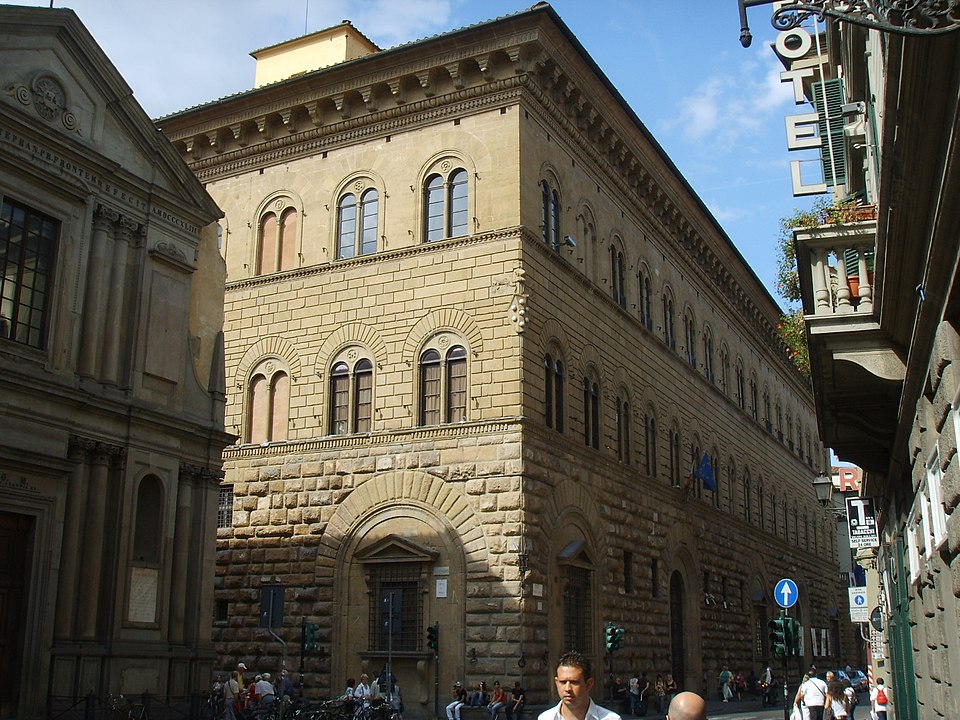
Leadership passed to Lorenzo's son Piero, who lacked both his father's political acumen and his grandfather's financial discipline. When Charles VIII of France invaded Italy in 1494 with an army of 25,000, Piero attempted to negotiate and made humiliating territorial concessions without consulting the Florentine Signoria. The citizens revolted. On November 9, 1494, the Medici were expelled from Florence. A mob invaded the Medici palace on the Via Larga, ransacking its contents and; most consequentially for historians; destroying large quantities of the bank's financial records. The bank was finished.
Legacy: The Foundations of Modern Banking
The Medici Bank operated for less than a century, yet its innovations became permanent features of the financial landscape. The bill of exchange, refined by the Medici and their contemporaries, evolved into the modern banker's acceptance and, more broadly, into the entire system of international trade finance. The correspondent banking model; in which banks in different cities maintain accounts with one another to facilitate cross-border payments; was perfected by the Medici network and remains the backbone of international banking today.
The holding company structure, with its separation of branch liabilities and its alignment of managerial incentives through profit-sharing partnerships, anticipated corporate forms that would not become widespread until the 19th century. When later financial innovators created the Dutch East India Company in 1602 with its joint-stock structure, they were building on organizational concepts that Florentine bankers had pioneered two centuries earlier.
The Medici Bank's relationship with sovereign borrowers also established patterns that have recurred throughout financial history. The temptation to lend to powerful governments; the perceived safety of sovereign credit, the political advantages of being a royal creditor, the competitive pressure from rival banks; has repeatedly led financial institutions to concentrate risk in ways that proved catastrophic. From Edward III's default on the Bardi and Peruzzi in the 1340s, through the Medici's losses to Edward IV in the 1470s, to the South Sea Company's entanglement with British government debt in the 1710s, the dynamic has remained remarkably consistent.
Perhaps most significantly, the Medici demonstrated both the potential and the peril of allowing financial institutions to accumulate political power. Cosimo de' Medici's ability to control Florence through the strategic deployment of capital rather than through military force was, in its way, a remarkable achievement. But the fusion of banking and politics also corrupted both activities. The bank's lending decisions were increasingly driven by political considerations rather than creditworthiness. Political decisions were shaped by the need to protect banking interests. The result was a system that enriched the Medici enormously in the short term but undermined the foundations of both the bank and the republic in the long term.
The story of the Medici Bank is, at its core, a story about the tension between financial innovation and the institutional safeguards needed to prevent that innovation from becoming destructive. It is a tension that every subsequent generation of bankers, regulators, and politicians has been forced to confront; and that none has fully resolved.
Related
Historical records Learn more about our methodology.