The Seeds of Catastrophe
No single cause produced the 2008 financial crisis — the worst global economic disaster since the Great Depression. It grew from forces that built over more than a decade: a prolonged period of low interest rates, an ideology of deregulation that treated financial markets as self-correcting, the explosive growth of instruments so complex their own creators did not fully understand them, and a housing bubble inflated by lending that had abandoned all discipline. To understand how these forces converged requires tracing the story back to the late 1990s.
After the dot-com crash of 2000 and the September 11 attacks, the Federal Reserve under Alan Greenspan cut the federal funds rate from 6.5% in January 2001 to just 1% by June 2003 — the lowest level in forty-five years. Cheap money flooded the economy, and much of it found its way into housing. Between 1997 and 2006, the median US home price rose 124%. Homeownership climbed to a record 69.2% in 2004. Among borrowers, lenders, and regulators alike, the conviction that housing prices could only go up hardened into something like religious faith.
While the bubble inflated, Congress and regulatory agencies were busy dismantling the safeguards that might have contained it. The Commodity Futures Modernization Act of 2000, championed by Senator Phil Gramm and signed by President Clinton, explicitly exempted over-the-counter derivatives — including credit default swaps — from regulatory oversight. That exemption would prove catastrophic.
The Subprime Mortgage Machine
At the crisis's core was subprime lending: mortgages extended to borrowers with weak credit, low incomes, limited documentation, or all of the above. In a healthy lending environment, such borrowers would have faced stringent conditions. Instead, during the early and mid-2000s, the mortgage industry abandoned underwriting discipline on an industrial scale.
Countrywide Financial, led by CEO Angelo Mozilo, pioneered the most aggressive practices. Countrywide offered adjustable-rate mortgages with introductory "teaser" rates as low as 1% that would reset to 8% or higher after two or three years. It extended "no-doc" and "stated income" loans — called "liar loans" for good reason — requiring little or no verification of the borrower's ability to repay. "We have no way to determine if the information is accurate," one Countrywide underwriting manual acknowledged. By 2006, the company was the largest mortgage originator in the United States, funding roughly one in every six American home loans.
Perverse incentives drove the machine. Loan officers earned commissions based on volume, not on whether borrowers could actually pay. Originating institutions had no intention of holding the loans on their own books — they sold them to investment banks, which bundled thousands of mortgages into securities for sale to investors worldwide. This "originate-to-distribute" model severed the link between the lender who made the loan and the risk that the borrower might default. Everyone in the chain collected fees. No one bore the consequences.
The Alchemy of Securitization
Wall Street's investment banks took the raw material of subprime mortgages and built instruments of bewildering complexity. Mortgage-backed securities (MBS) pooled thousands of individual loans and distributed the cash flows — borrowers' payments of principal and interest — to investors. That part was simple enough. The critical innovation was the collateralized debt obligation, or CDO.
CDOs took pools of mortgage-backed securities and carved them into tranches with different risk profiles. Senior tranches were paid first from the pool's cash flows and suffered losses last, in exchange for lower yields. Junior or "equity" tranches absorbed losses first and were compensated with higher yields. What the structure's proponents claimed was a kind of financial alchemy: a pool of mediocre-quality mortgages could be transformed into securities whose senior tranches qualified for AAA credit ratings — the same rating assigned to US government bonds.
Moody's, Standard & Poor's, and Fitch Ratings were central to the alchemy. They rated senior CDO tranches as AAA based on mathematical models that assumed housing prices would not decline nationwide simultaneously and that mortgage defaults in different regions would remain largely uncorrelated. Both assumptions proved wrong — when the housing market turned, correlations spiked toward one across asset classes and geographies. The agencies also operated under a conflict of interest that should have been disqualifying: they were paid by the banks issuing the securities, not by the investors relying on the ratings.
Between 2004 and 2007, Wall Street issued approximately $700 billion in CDOs. Goldman Sachs, Morgan Stanley, Merrill Lynch, Citigroup, and Deutsche Bank ranked among the most active issuers. In some cases, banks created CDOs while simultaneously betting against them through credit default swaps — a practice that later drew SEC enforcement actions and confirmed, for many Americans, that the game had been rigged.
Credit Default Swaps and the AIG Time Bomb
Credit default swaps added yet another layer of danger. A CDS functioned like an insurance policy: the buyer paid a premium, and in return, the seller promised to cover losses if a particular bond or security defaulted. Unlike traditional insurance, CDS were unregulated, required no reserves against potential claims, and could be purchased by speculators who owned none of the underlying securities.
American International Group became the single largest seller of CDS on mortgage-related securities. AIG's Financial Products division, based in London under Joseph Cassano, sold an estimated $440 billion in CDS protection, collecting billions in premiums while setting aside virtually no reserves. When a colleague questioned whether the housing market might turn, Cassano reportedly dismissed the concern: "It is hard for us, without being flippant, to even see a scenario within any kind of realm of reason that would see us losing one dollar in any of those transactions." AIG's AAA credit rating went unquestioned.
When housing prices began falling and underlying securities deteriorated, AIG was required to post collateral against its CDS positions. The amounts quickly grew beyond anything the company could cover. By September 2008, AIG faced collapse — and with it, the threat of cascading defaults throughout the global financial system.
The September 2008 Collapse
September 2008 unfolded like a financial disaster film running at double speed. On September 7, the federal government seized Fannie Mae and Freddie Mac — the two government-sponsored mortgage giants that together guaranteed or held roughly $5 trillion in mortgage debt — placing both into conservatorship and committing up to $200 billion in taxpayer funds to cover their losses.
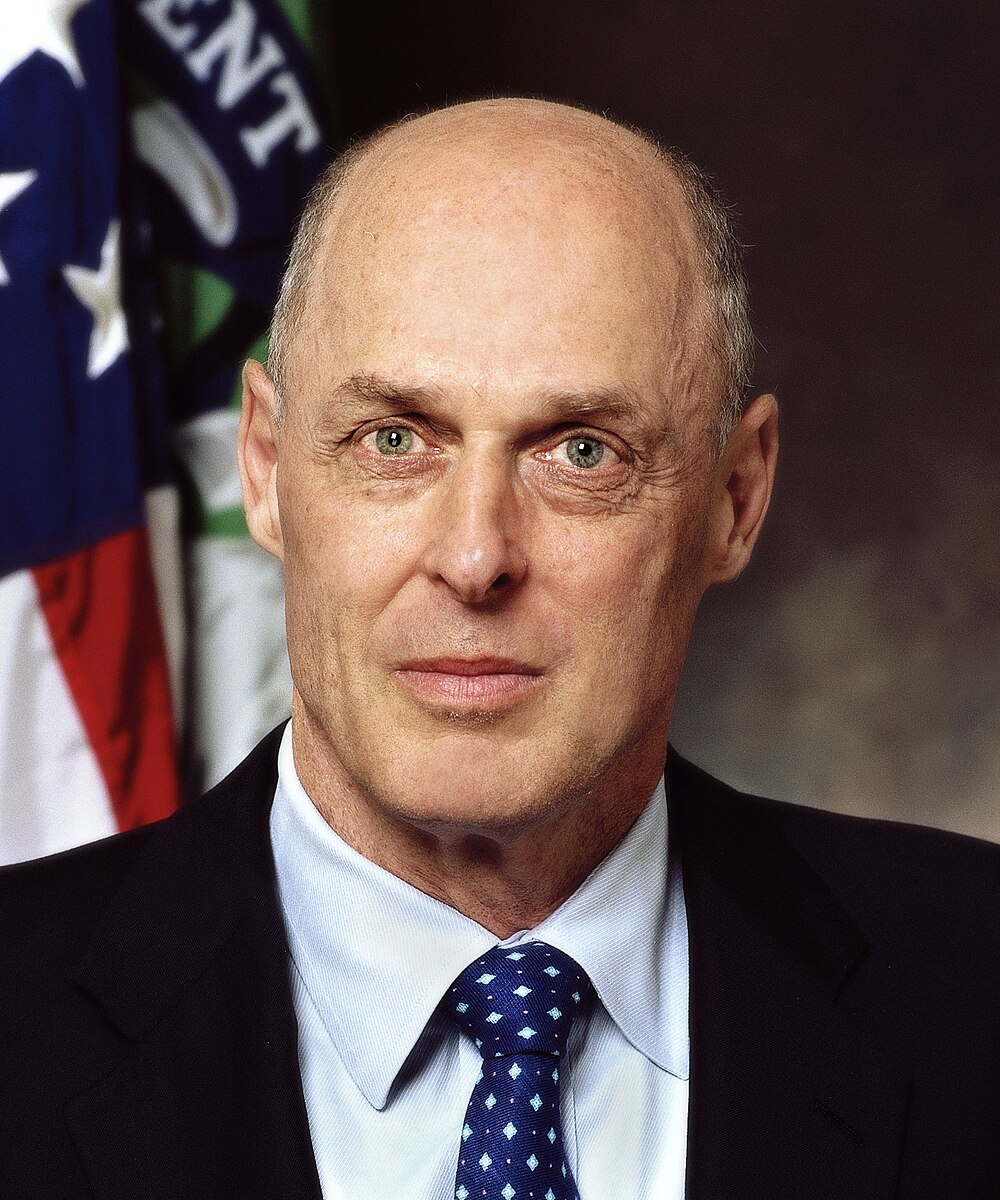
Eight days later, on September 15, Lehman Brothers filed for bankruptcy with $639 billion in assets. It was the largest bankruptcy in American history. Treasury Secretary Henry Paulson and Fed Chairman Ben Bernanke had decided against a rescue, partly because they believed other firms had had time to prepare, partly to demonstrate that government would not bail out every failing institution. "I never once considered it appropriate to put taxpayer money on the line in resolving Lehman Brothers," Paulson later wrote. The decision proved catastrophic — Lehman's collapse froze credit markets worldwide.
The following day, the Federal Reserve extended an $85 billion emergency loan to AIG, effectively nationalizing the company to prevent its default from triggering a cascade of losses across every major financial institution that had purchased CDS protection from it. The loan would eventually grow to $182 billion.
| Date | Event |
|---|---|
| Sep 7 | Fannie Mae and Freddie Mac placed in conservatorship |
| Sep 14 | Merrill Lynch sold to Bank of America |
| Sep 15 | Lehman Brothers files for bankruptcy |
| Sep 16 | AIG receives $85 billion Fed bailout |
| Sep 19 | Treasury announces TARP proposal |
| Sep 25 | Washington Mutual seized by FDIC |
| Sep 29 | House rejects first TARP vote; DJIA falls 778 points |
| Oct 3 | Revised TARP signed into law |
Panic spread to every corner of the system within days. The Reserve Primary Fund, a money market fund holding $62.5 billion in assets, "broke the buck" on September 16 after writing down its Lehman holdings — the first money market fund to fail in fourteen years. Investors rushed to withdraw from other money market funds, threatening to shut down the commercial paper market that corporations relied upon for daily financing. On September 21, Goldman Sachs and Morgan Stanley — the last two independent investment banks on Wall Street — converted to bank holding companies to gain access to Federal Reserve emergency lending, ending an era that had begun with the rise of the great Wall Street partnerships.
The Government Response
By October 2008, the crisis had grown so large that the government response dwarfed anything attempted in peacetime. On October 3, Congress passed the Emergency Economic Stabilization Act, creating the Troubled Asset Relief Program (TARP) with an initial authorization of $700 billion. Paulson used the first $250 billion to inject capital directly into banks by purchasing preferred stock — a departure from the original plan to buy toxic assets. On October 13, the nine largest banks — JPMorgan Chase, Bank of America, Citigroup, Wells Fargo, Goldman Sachs, and four others — were summoned to Washington and presented with term sheets. Acceptance, Paulson made clear, was not optional.
Ben Bernanke deployed an arsenal of emergency programs at the Fed. He cut the federal funds rate to a range of zero to 0.25% in December 2008, then launched quantitative easing — purchasing mortgage-backed securities and Treasury bonds to inject liquidity and drive down long-term rates. By 2014, the Fed's balance sheet had expanded from roughly $900 billion to over $4.4 trillion.
Internationally, central banks coordinated their response with unusual speed. The Bank of England, the European Central Bank, and the Bank of Japan all cut rates and launched asset purchase programs of their own. G-20 leaders met in Washington in November 2008 and in London in April 2009 to coordinate fiscal stimulus and regulatory reform.
The Human Toll
Behind the acronyms and balance sheet figures, the crisis destroyed lives. US households lost an estimated $16 trillion in net worth between June 2007 and March 2009. The S&P 500 suffered a maximum drawdown of 57% from its October 2007 peak to its March 2009 trough. Unemployment rose from 4.7% to 10%. Approximately 3.8 million foreclosure filings were recorded in 2010 alone, and an estimated 10 million Americans lost their homes during the crisis years.
Those losses fell unevenly. Black and Hispanic households, disproportionately targeted by subprime lenders, absorbed the heaviest blows. Between 2005 and 2009, median wealth for Hispanic households fell 66% and for Black households 53%, according to the Pew Research Center — compared with 16% for white households. The crisis did not create racial wealth gaps in America, but it widened them dramatically.
Damage radiated far beyond US borders. Iceland's banking system collapsed entirely. Ireland, Spain, and Greece entered recessions deep enough to trigger the European sovereign debt crisis. Global trade contracted 12% in 2009, the steepest decline since the 1930s.
Regulatory Reform and Lasting Legacy
Out of the wreckage came the most sweeping overhaul of financial regulation since the New Deal. The Dodd-Frank Wall Street Reform and Consumer Protection Act, signed by President Obama on July 21, 2010, ran to 848 pages and spawned thousands more in implementing regulations. Its key provisions included stricter capital and liquidity requirements for banks, the Volcker Rule restricting proprietary trading by institutions with federally insured deposits, the creation of the Consumer Financial Protection Bureau, a new framework requiring standardized swaps to be cleared through central counterparties, and the Financial Stability Oversight Council to monitor systemic risk.
What 2008 exposed was not a single failure but a system-wide breakdown in which every safeguard failed simultaneously. Financial innovation outran regulation. Incentives rewarded volume over prudence at every link in the chain. Value-at-Risk models systematically underestimated tail risk because they relied on historical data from a period of unusual calm. Credit ratings were corrupted by the fees of the institutions they were supposed to evaluate. And the fundamental tension the crisis laid bare — between the efficiency gains of complex financial markets and the systemic risks they generate — remains unresolved. Dodd-Frank raised the guardrails. Whether they are high enough for the next crisis is a question no one can answer in advance.
Related
Market Histories Learn more about our methodology.