Before the Ledger: A World of Guesswork
Imagine running a business without knowing whether you made a profit last year. Not approximately, not roughly — genuinely not knowing, because no system existed to tell you. This was the reality for most merchants throughout human history. Before double-entry bookkeeping, commerce operated on a foundation of partial records, scattered notes, and the fallible memory of the men who conducted it.
Single-entry bookkeeping — if the ad hoc methods used by medieval merchants deserve the name — amounted to little more than a list of transactions. A trader might record that he sold ten bolts of cloth to a customer in Bruges, or that he received a shipment of spices from Alexandria. But these entries existed in isolation. There was no systematic mechanism to connect them, no way to verify that the records were complete, and no procedure for calculating the overall financial position of the enterprise. Detecting theft required catching the thief. Spotting an error meant stumbling upon it by accident. A merchant's understanding of his own wealth was, in the most literal sense, a guess.
The consequences were profound. Without reliable accounting, partnership disputes were endemic. When two merchants pooled capital for a trading venture, each relied on the other's honesty — and on their own incomplete records — to determine how profits should be divided. Credit relationships were fragile, sustained by personal reputation rather than verifiable documentation. Scale was the enemy of oversight: the larger the enterprise, the more likely it was that errors, fraud, or simple incompetence would go undetected until the damage was catastrophic.
Into this landscape of commercial improvisation, an innovation emerged from the Italian city-states that would fundamentally alter the relationship between information and economic power.
Origins in the Italian Counting Houses
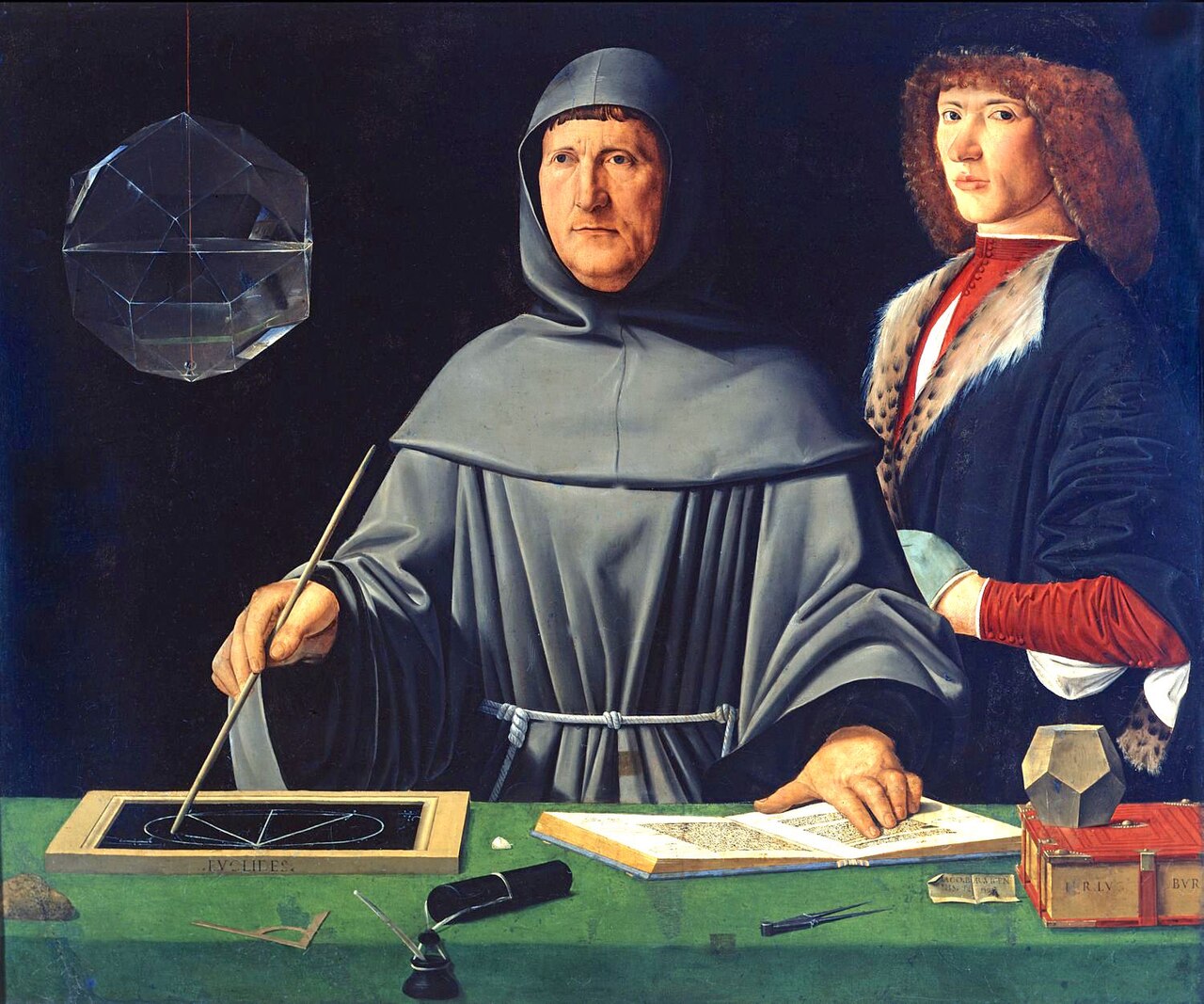
Double-entry bookkeeping did not arrive as a sudden invention. It evolved gradually, developed by merchants who needed better tools to manage increasingly complex trading operations across the Mediterranean world.
The earliest known complete double-entry ledger belongs to the Farolfi company, a firm of Florentine merchants operating in Nimes, France. Their surviving accounts from 1299 to 1300 show the essential features of the system: transactions recorded as both debits and credits, with corresponding entries in separate accounts that could be cross-referenced and verified (Sangster, 2016). The Farolfi ledger was not a theoretical exercise. It was a working document, created by practical men solving practical problems — specifically, the problem of tracking assets, liabilities, and profits across a geographically dispersed trading network.
Forty years later, the Massari accounts of the Commune of Genoa, dating to 1340, provide the earliest surviving example of double-entry bookkeeping applied to public finance. Genoa's municipal treasurers used the system to track revenues, expenditures, and the republic's growing public debt — an early instance of the same innovation that would later underpin sovereign borrowing across Europe, including the famous Banco di Venezia.
By the fourteenth and fifteenth centuries, double-entry methods had spread through the merchant communities of Florence, Venice, Genoa, and Milan. Each city developed its own variations, but the core logic was consistent: every transaction affects at least two accounts; for every debit there must be an equal credit; and the books must balance. Florentine merchants refined the system through the great banking houses, none more so than the Medici Bank, which used double-entry methods to manage branch operations stretching from London to Constantinople.
| Date | Milestone | Significance |
|---|---|---|
| 1299-1300 | Farolfi company ledger (Florence/Nimes) | Earliest known complete double-entry accounts |
| 1340 | Massari accounts (Commune of Genoa) | First double-entry in public-sector finance |
| c. 1390s | Medici Bank adoption | Double-entry as multinational management tool |
| 1458 | Benedetto Cotrugli's manuscript | First known written description of the method |
| 1494 | Pacioli's Summa de Arithmetica | First printed codification; mass dissemination begins |
The Medici experience was particularly instructive. Cosimo de' Medici and his general manager Giovanni Benci used the balance sheet not merely as a record of past transactions but as a management tool — a means of evaluating the performance of distant branch managers, detecting unauthorized lending, and assessing the overall health of an enterprise whose operations spanned half a continent. When the Medici Bank ultimately collapsed in the 1490s, the failure was not one of accounting method but of management discipline: the successors of Cosimo and Benci ignored what the books were telling them (de Roover, 1963).
Yet for all its practical power, double-entry bookkeeping remained an oral tradition — a craft skill transmitted from master to apprentice within the closed world of Italian merchant houses. No comprehensive written description existed. An obscure Ragusan merchant named Benedetto Cotrugli composed a manuscript on commerce in 1458 that included a brief treatment of double-entry, but it would not be published until 1573, nearly eighty years after it was written. The method needed a codifier. It needed a printer. And it needed a man with the intellectual range to place bookkeeping within the broader context of mathematical knowledge.
The Friar Who Loved Numbers
Luca Pacioli was born around 1447 in Borgo Sansepolcro, a small town in the Tiber valley of central Italy. His early education was shaped by the artistic and mathematical culture of his hometown, which had produced the painter and geometer Piero della Francesca — a figure who would profoundly influence Pacioli's intellectual development. As a young man, Pacioli moved to Venice, where he worked as a tutor to the sons of a wealthy merchant named Antonio de Rompiasi while studying mathematics under the guidance of Domenico Bragadino (Taylor, 1942).
Venice in the 1460s was the commercial capital of the Mediterranean world. Its merchant houses had refined double-entry bookkeeping to a sophisticated art, and the young Pacioli absorbed these methods as naturally as he absorbed the mathematics he studied in the city's schools. He entered the Franciscan order around 1470, a decision that gave him the institutional support and intellectual freedom to pursue his scholarly ambitions without the distractions of commercial life.
Over the next two decades, Pacioli taught mathematics at universities across Italy — Perugia, Naples, Rome, Zara. He became a figure of considerable reputation in Italian intellectual circles, known for his ability to make complex mathematical ideas accessible to practical audiences. His connections were extraordinary. In Milan during the 1490s, he lived and worked alongside Leonardo da Vinci, who illustrated Pacioli's treatise on geometric proportions, De Divina Proportione. Pacioli tutored the children of Duke Ludovico Sforza. He corresponded with the leading mathematicians and humanists of his age.
He was, in short, precisely the kind of figure who could bridge the gap between the practical knowledge of the counting house and the emerging world of printed scholarship.
The Summa: A Mathematics Encyclopedia with a Revolutionary Appendix
On November 10, 1494, Luca Pacioli published the Summa de Arithmetica, Geometria, Proportioni et Proportionalita — a massive 615-page encyclopedia of mathematical knowledge. Printed in Venice by Paganino de Paganini, it was one of the earliest mathematical works to be produced on a printing press, and Pacioli dedicated it to his patron, Duke Guidobaldo of Urbino.
The Summa was a compendium of everything Pacioli knew about arithmetic, algebra, geometry, and commercial mathematics. It synthesized the work of earlier mathematicians — Fibonacci's Liber Abaci, Euclid's Elements, and the broader tradition of Italian commercial arithmetic — into a single reference volume intended for merchants, students, and scholars alike. Written in vernacular Italian rather than Latin, it was designed to be read by educated businessmen, not only by academics.
Buried within this encyclopedic work was a section of 27 pages that would prove more consequential than the remaining 588 combined. Titled Particularis de Computis et Scripturis — Details of Calculation and Recording — it was the first printed, systematic description of double-entry bookkeeping.
Pacioli did not claim to have invented the system. He described it as the Venetian method, alla veneziana, acknowledging that it was established practice among the merchants of Venice. His contribution was not innovation but codification: he took an oral tradition that existed in the minds and ledgers of Italian merchants and rendered it in print, complete with rules, examples, and practical instructions that anyone who could read Italian could follow.
The Venetian Method Explained
Pacioli's accounting system rested on three foundational books. The first was the memoriale, a day book or waste book in which every transaction was recorded chronologically as it occurred, in whatever form the merchant found convenient — narrative descriptions, rough notes, abbreviated entries. Nothing was to be omitted. As Pacioli wrote, the memoriale should record transactions large and small, because it was the raw material from which proper accounting records would be constructed.
The second book was the giornale, the journal. Here the entries from the memoriale were rewritten in a standardized format, with each transaction clearly identified as a debit (per) or a credit (a). The journal entry named the accounts affected and the amounts involved, creating a chronological record that was both more systematic than the memoriale and more detailed than the ledger.
The third and most important book was the quaderno, the ledger. This was the heart of the system. Each account occupied its own page (or pair of facing pages), with debits on the left and credits on the right. The journal entries were posted to the appropriate ledger accounts, and at any point a merchant could examine a specific account — cash, goods, a particular debtor or creditor — and determine its current balance.
The genius of the system lay in its self-checking mechanism. Because every transaction was recorded as both a debit and a credit, the sum of all debit balances in the ledger had to equal the sum of all credit balances. If they did not, an error had been made somewhere, and the trial balance — the summa summarium, in Pacioli's terminology — would reveal the discrepancy. Pacioli was emphatic on this point: a merchant should not go to sleep at night until his debits equaled his credits.
This was not merely an accounting technique. It was an epistemological revolution. For the first time, the financial position of an enterprise could be determined with mathematical certainty rather than estimated through intuition. Profit was no longer a matter of opinion; it was a number that could be calculated, verified, and compared across time periods. The invisible had been made visible.
The Printing Press Amplification
Pacioli's codification of double-entry bookkeeping would have remained a minor contribution to commercial literature had it not arrived at precisely the moment when a transformative communication technology was reaching maturity. Johannes Gutenberg had produced his first printed Bible in the 1450s, and by the 1490s the printing industry had spread across Europe. Venice alone had over 150 printing houses, making it the publishing capital of the Western world.
Before Pacioli, knowledge of double-entry methods was confined to the Italian merchant communities where it had developed. A young trader in Augsburg, Lisbon, or London might hear that the Venetians and Florentines kept their books differently, but accessing the actual technique required either traveling to Italy or finding someone who had. The Summa changed this equation entirely. Printed copies could be purchased, studied, and imitated anywhere that books could reach. Within decades, the Venetian method had spread beyond Italy to the trading centers of Germany, the Low Countries, Spain, and eventually England and France.
The diffusion was accelerated by a succession of derivative works. In 1543, Hugh Oldcastle published the first English-language treatise on double-entry bookkeeping, drawing directly on Pacioli's text. Jan Ympyn Christoffels published a Flemish and French translation of Pacioli's method in 1543. German adaptations appeared in the 1530s. Each translation and adaptation carried the Venetian method further from its origins, embedding it in new commercial cultures and new languages (Gleeson-White, 2012).
The combination of Pacioli's codification and Gutenberg's technology created one of the most powerful feedback loops in economic history. Better accounting enabled larger and more complex enterprises. Larger enterprises demanded more sophisticated accounting. The demand for accounting knowledge drove the production of more printed manuals. And the cycle continued.
The Balance Sheet as a Tool of Capitalism
Werner Sombart, the German economic historian, made a famous and controversial claim in his 1916 work Der Moderne Kapitalismus: capitalism and double-entry bookkeeping are so intimately connected that one cannot imagine the development of one without the other. Sombart argued that double-entry bookkeeping did not merely record capitalist activity — it made capitalist thinking possible by providing a framework for the rational calculation of profit and the systematic deployment of capital (Sombart, 1916).
The claim has been debated for a century, but its core insight remains compelling. Before double-entry bookkeeping, a merchant's capital was entangled with his personal wealth in ways that made rational economic calculation extraordinarily difficult. Was the household silverware a business asset or a personal luxury? Did the family home represent capital invested in the enterprise or merely a place to live? Single-entry records could not answer these questions because they had no mechanism for distinguishing between the owner and the enterprise.
Double-entry bookkeeping solved this problem by creating what accountants call the entity concept — the idea that the business is a separate economic entity from its owner, with its own assets, liabilities, and equity. The owner's investment in the business was recorded as a credit to the capital account, and the business's obligations to the owner were tracked just as meticulously as its obligations to external creditors. For the first time, it became possible to calculate the return on invested capital — the fundamental metric of capitalist decision-making.
This conceptual separation had practical consequences of enormous significance. It enabled partnership accounting: if the business was a separate entity, then multiple investors could contribute capital and share profits according to precisely calculated ratios. It enabled branch accounting: the Medici Bank could evaluate the performance of its branches in London, Bruges, and Rome by comparing their individual balance sheets. And it enabled succession planning: when a merchant died, the books could reveal the exact financial position of the enterprise, allowing heirs or liquidators to proceed on the basis of fact rather than guesswork.
From Venice to the VOC: Double-Entry Goes Corporate
By the early seventeenth century, double-entry bookkeeping had become the standard accounting method for large-scale commercial enterprises across Europe. Its adoption by the great chartered trading companies marked a decisive moment in its evolution from a merchant's personal tool to the infrastructure of corporate capitalism.
The Dutch East India Company — the VOC, founded in 1602 — was arguably the first large organization to require standardized double-entry bookkeeping across its entire operation. As the world's first joint-stock company with permanent capital, the VOC needed an accounting system capable of tracking investments from thousands of shareholders, managing operations spanning from Amsterdam to Batavia, and reporting financial results to a board of directors who demanded accountability. Double-entry provided the architecture.
The English East India Company adopted similar methods, as did the great trading houses of Hamburg, Antwerp, and London. Jakob Fugger, who had learned the Venetian method during his apprenticeship in Venice in the 1470s, used double-entry bookkeeping to manage his copper and silver mining empire with a precision that astonished his contemporaries. His ability to know, at any given moment, the exact financial position of mining operations spread across Hungary, Tyrol, and Spain was a direct product of the accounting system that Pacioli had codified.
The joint-stock company and double-entry bookkeeping were natural complements. Without a reliable accounting system, the separation of ownership from management — the defining feature of the modern corporation — would have been impossible. Shareholders who invested capital in an enterprise they did not personally manage needed assurance that the managers were honest and competent. The books provided that assurance, or at least the possibility of it. An independent audit of double-entry accounts could, in principle, detect fraud, waste, and mismanagement. In practice, the effectiveness of this oversight depended on the integrity of the auditors — a vulnerability that would resurface with devastating consequences centuries later.
The Evolution: From Quill to Computer
Pacioli's system, remarkably, required almost no modification to its fundamental logic as it evolved over the following five centuries. The tools changed; the principle did not.
The seventeenth and eighteenth centuries saw the proliferation of specialized accounting texts and the gradual formalization of accounting practice. National variations emerged — the French Plan Comptable, the German Handelsgesetzbuch — but all were built on the double-entry foundation. The profession itself began to take institutional form with the founding of the Institute of Accountants in Glasgow in 1854, followed by the Institute of Chartered Accountants in England and Wales in 1880. These bodies established standards of practice, codes of ethics, and examination requirements that transformed bookkeeping from a merchant's craft into a regulated profession.
The industrial revolution amplified the demand for sophisticated accounting. Factories, railways, and mines required cost accounting methods that could track the flow of materials and labor through complex production processes. These methods were extensions of Pacioli's framework, applied to new economic realities but built on the same underlying logic of debits and credits, journals and ledgers.
Computerization, beginning in the 1960s and accelerating through the advent of personal computers and enterprise resource planning systems, automated the mechanical aspects of bookkeeping while preserving its conceptual structure. When a modern accountant enters a transaction into SAP, Oracle, or QuickBooks, the software automatically generates the corresponding debit and credit entries, posts them to the appropriate ledger accounts, and updates the trial balance — performing in milliseconds the same operations that a fifteenth-century Venetian clerk would have performed with a quill pen over the course of an afternoon. The database has replaced the quaderno, but Pacioli would recognize the logic.
When the System Was Corrupted: The Enron Warning
The very power of double-entry bookkeeping — its capacity to render the financial position of an enterprise in precise, verifiable terms — created a corresponding vulnerability. If the books could make the invisible visible, they could also, in dishonest hands, make the visible disappear.
The most dramatic modern illustration of this vulnerability was the collapse of Enron Corporation in 2001. Enron's management, with the active complicity of its auditors at Arthur Andersen, exploited the complexity of modern accounting standards to construct financial statements that concealed billions of dollars in debt and vastly overstated the company's profitability. Special-purpose entities were used to move liabilities off the balance sheet. Mark-to-market accounting was applied to contracts whose values were based on assumptions that bore no relationship to economic reality. Revenue was recognized on transactions that generated no cash.
The fraud was eventually detected — not by the auditors who were supposed to be the guardians of the system, but by short sellers, journalists, and a single internal whistleblower. Arthur Andersen, one of the five largest accounting firms in the world and a partnership that had operated for nearly ninety years, was destroyed. The Sarbanes-Oxley Act of 2002 imposed new regulatory requirements on public company accounting, including mandatory auditor rotation and enhanced internal controls.
Pacioli had anticipated the risk, if not the specific form it would take. His instructions in the Particularis de Computis included repeated admonitions about the importance of honesty, the moral obligations of the bookkeeper, and the spiritual dimensions of commercial integrity. He wrote as a Franciscan friar as well as a mathematician, and he understood that no accounting system, however elegantly designed, could function without the good faith of the people who operated it. The system could detect errors. It could not, by itself, prevent lies.
Five Centuries Later
Luca Pacioli died in 1517, in his hometown of Borgo Sansepolcro, largely forgotten by the world beyond the mathematical and Franciscan communities that had sustained him. He never became wealthy. He never held political office. He spent his final years teaching and revising his mathematical works, probably unaware that the 27 pages he had devoted to bookkeeping would outlast everything else he had written.
Today, every publicly traded company on earth — from Apple to Toyota to Saudi Aramco — produces financial statements that rest on the same principles Pacioli described in 1494. The International Financial Reporting Standards used by companies in over 140 countries, and the Generally Accepted Accounting Principles that govern financial reporting in the United States, are elaborations of the Venetian method. The trial balance, the journal, the ledger, the fundamental equation of assets equals liabilities plus equity — all are directly descended from the system Pacioli codified in his encyclopedia of mathematics.
Max Weber, the sociologist who devoted his career to understanding the origins of modern capitalism, placed rational accounting alongside bureaucracy and the rule of law as one of the indispensable preconditions for capitalist development. Without the ability to calculate profit and loss in a systematic and verifiable manner, the rational deployment of capital was impossible. Without rational deployment of capital, the engine of economic growth that has lifted billions out of poverty over five centuries could never have started.
Sombart may have overstated the case when he declared that capitalism was inconceivable without double-entry bookkeeping. But consider the alternative: a world in which no enterprise could determine its own profitability, no investor could evaluate a potential investment, no bank could assess a borrower's creditworthiness, and no government could audit a company's tax obligations. That was the world before Pacioli. The 27 pages he wrote in a Venetian printing house in 1494, codifying methods that anonymous Italian merchants had developed over the preceding two centuries, remain the invisible foundation on which every financial transaction on earth is recorded, verified, and understood.
Related
Historical records Learn more about our methodology.