A System Without a Safety Net
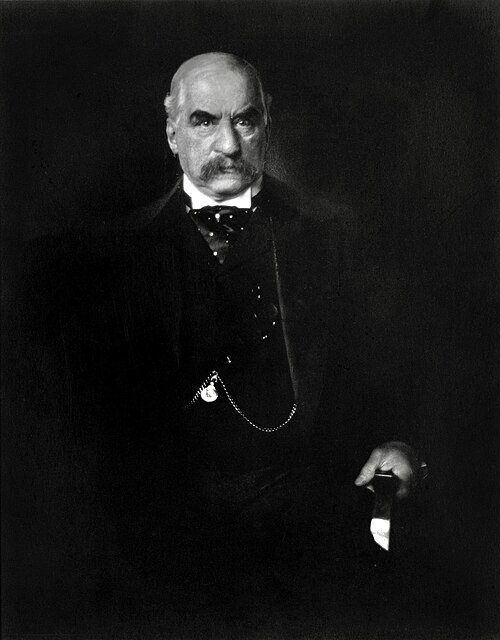
In the autumn of 1907, the United States had no central bank. No lender of last resort, no deposit insurance, no systematic mechanism for injecting liquidity into a panicking financial system — the Federal Reserve would not exist for another six years. When crisis hit, the nation's fate rested on the judgment, resources, and willingness of private financiers. In October 1907, that meant one man above all: John Pierpont Morgan, the seventy-year-old titan of American finance.
American banking in the early twentieth century was a fragmented, unstable structure. National banks operated under relatively strict federal reserve requirements. State-chartered banks followed weaker, inconsistent state regulations. But the most dynamic and dangerous corner of the system was occupied by the trust companies — institutions that had quietly built a leveraged empire outside any safety net.
The Trust Company Problem
Trust companies had originally been created to manage estates and trusts for wealthy clients. By the early 1900s, they had evolved into aggressive financial operators that accepted deposits, made loans, and poured money into real estate and securities — all while holding far less cash in reserve than national banks. New York's trust companies were required to keep only about 5% of deposits on hand, compared to 25% for national banks, a gap that let them offer higher deposit rates and siphon funds away from more conservatively managed institutions.
Between 1897 and 1907, assets at New York trust companies ballooned from $396 million to $1.39 billion — a gain of over 250%. Their combined assets nearly matched those of all national banks in the city by 1907. Yet trust companies did not belong to the New York Clearing House, the consortium of national banks that provided mutual support during financial stress. They had, in effect, constructed a vast leveraged structure with no backstop.
| Institution Type | Required Reserves | Assets (1907, NYC) |
|---|---|---|
| National Banks | 25% of deposits | $1.63 billion |
| Trust Companies | ~5% of deposits | $1.39 billion |
| State Banks | 10-15% of deposits | $0.89 billion |
The Heinze-Morse Copper Scheme
What lit the fuse was a botched attempt to corner the stock of United Copper Company. F. Augustus Heinze, a flamboyant Montana copper magnate, and his associate Charles W. Morse — a financier who controlled a chain of banks and steamship lines — believed that short sellers had hammered United Copper's share price. Heinze planned to buy aggressively and force the shorts to cover at inflated prices.
On Monday, October 14, 1907, Heinze launched the corner. United Copper shares surged from $39 to $60 in a single session. On Tuesday he called for the shorts to deliver their shares, expecting them to scramble. They didn't. Shorts easily found shares from sources Heinze had not anticipated, and United Copper collapsed from $60 to $10 by Wednesday. Heinze was ruined.
A failed speculation by one copper magnate might have been contained as an isolated disaster, but Heinze's tentacles reached deep into the banking system. He was president of the Mercantile National Bank; Morse controlled several other banks. Once their losses became public, depositors started pulling cash from any institution associated with either man. On October 19, the New York Clearing House forced both men to resign from their bank positions. It was too late — the contagion was already spreading.
The Knickerbocker Trust Collapse
On Monday, October 21, the National Bank of Commerce announced it would no longer clear checks for the Knickerbocker Trust Company — the third-largest trust in New York, holding over $65 million in deposits. Knickerbocker's president, Charles T. Barney, was known to have business ties to both Morse and Heinze. Refusing to clear a trust company's checks amounted to a public declaration of no confidence.
By the next morning, a run was underway. Depositors formed lines stretching around the block from Knickerbocker's ornate headquarters at Fifth Avenue and 34th Street. In barely three hours the trust paid out $8 million before suspending payments at noon. Barney was forced to resign; he would take his own life the following year.
If the third-largest trust company in New York could fail overnight, no institution seemed safe. Runs spread to the Trust Company of America and the Lincoln Trust Company. Stock prices plunged as investors scrambled for cash, with the maximum drawdown approaching levels that would not be matched until 1929.
Source: Dow Jones Industrial Average, historical data from Bruner and Carr (2007)
Morgan Takes Command
J.P. Morgan had been attending an Episcopal convention in Richmond, Virginia, when the crisis erupted. He returned to New York on October 19 and immediately assumed control — not of a government agency or a central bank, but of the crisis itself. Operating from his private library at 36th Street and Madison Avenue — a building that now houses the Morgan Library — he summoned the presidents of New York's leading banks and trust companies and began orchestrating a series of rescues that no public institution was equipped to attempt.
On the evening of October 22, as the Trust Company of America teetered on the edge, Morgan dispatched Benjamin Strong — who would later become the first president of the Federal Reserve Bank of New York — to examine its books overnight. Strong's verdict: the trust was solvent, its assets exceeding its liabilities, but it lacked the liquid cash to withstand continued withdrawals. Morgan organized a bank syndicate to supply emergency loans, and on October 23 the Trust Company of America opened its doors with cash furnished by Morgan's consortium.
Crisis deepened again on October 24 when the president of the New York Stock Exchange warned Morgan that the exchange would have to close early. Brokerage firms could not obtain loans to finance their stock positions, and call money rates — the interest on overnight loans to brokers — had spiked above 100% annualized. Within minutes Morgan organized a $25 million pool from the major banks and dispatched it to the exchange floor, averting a forced shutdown.
Over the next two weeks, Morgan orchestrated a comprehensive stabilization. He persuaded the U.S. Treasury to deposit $25 million in government funds in New York banks. He assembled a second pool of $10 million to shore up trust companies. When New York City itself could not sell bonds to meet payroll, Morgan arranged for his syndicate to purchase $30 million in city bonds. And in a maneuver of breathtaking audacity, he used the crisis to secure approval for U.S. Steel's acquisition of the Tennessee Coal, Iron and Railroad Company — extracting from President Theodore Roosevelt a commitment not to pursue antitrust action — a deal that would have been unthinkable under normal circumstances.
The Birth of the Federal Reserve
Morgan contained the panic, but the lesson was impossible to miss. The United States could not keep relying on one private citizen — however wealthy, however willing — to prevent financial catastrophe. Morgan was seventy. No one of comparable stature stood behind him. Senator Nelson Aldrich of Rhode Island, chairman of the Senate Finance Committee, convened the National Monetary Commission to study European banking systems and propose reforms.
What emerged — shaped in part by a secret meeting of bankers and politicians on Jekyll Island, Georgia, in November 1910 — became the blueprint for the Federal Reserve System. On December 23, 1913, President Woodrow Wilson signed the Federal Reserve Act, creating twelve regional reserve banks overseen by a Board of Governors in Washington. For the first time, the nation had an institution that could issue currency, set reserve requirements, and — most critically — act as a lender of last resort, providing liquidity to solvent banks during panics. Morgan did not live to see it. He died on March 31, 1913, eight months before the bill became law.
Two decades later, the Glass-Steagall Act of 1933 added deposit insurance and the separation of commercial and investment banking. But the fundamental architecture — a central bank that could intervene to prevent liquidity crises from becoming solvency crises — originated in the lessons of 1907. Every time a central bank steps in as lender of last resort during a financial crisis, from the 2008 financial crisis to the COVID-19 pandemic, it is acting on a template born from the realization that one aging financier, however formidable, could not be expected to save the system forever.
Related
Historical records Learn more about our methodology.