The Hero Who Could Not Stop
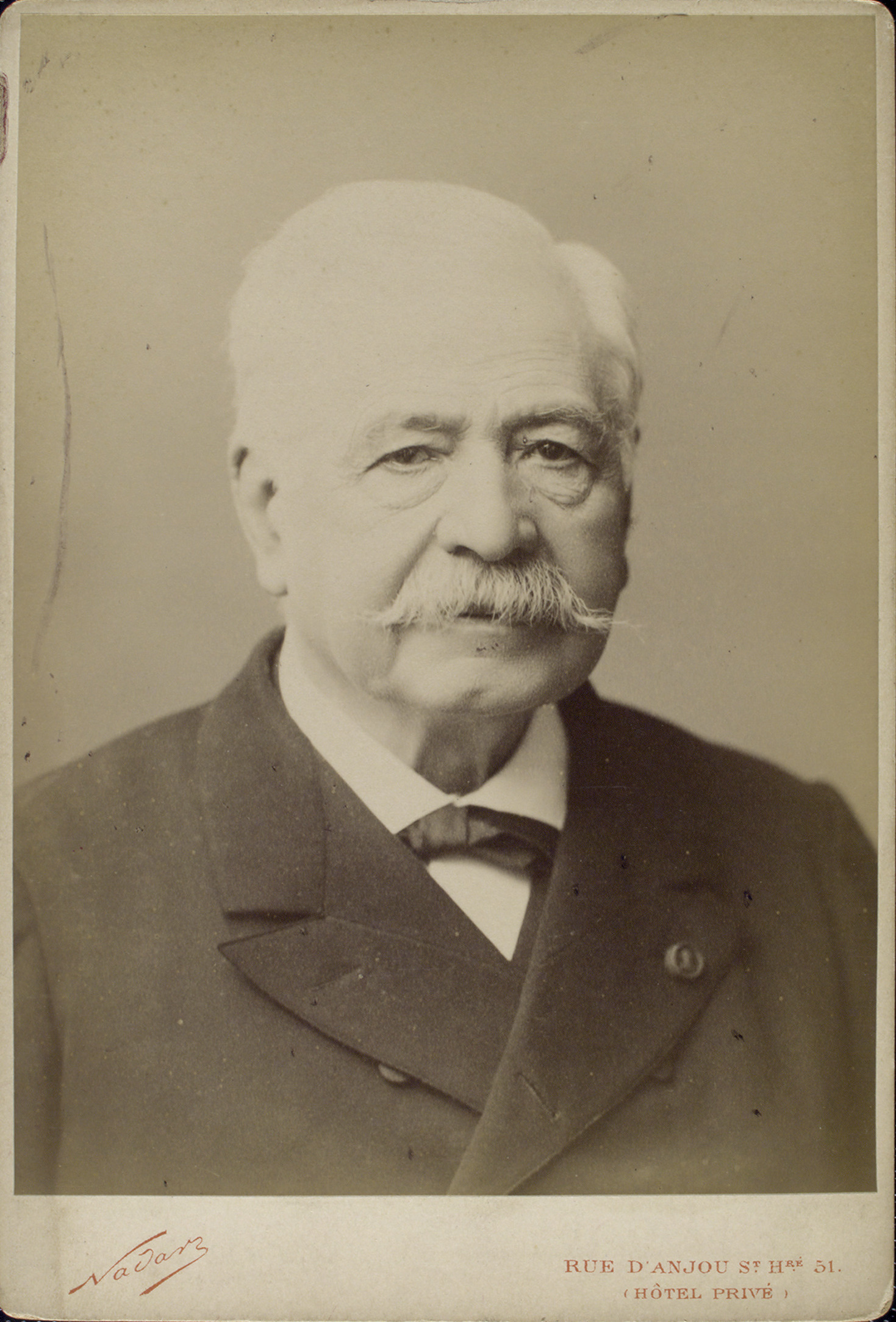
On 15 May 1879, in the Société de Géographie's hall on the rue Saint-Germain in Paris, an international congress of 136 delegates voted 78 to 8 in favour of a sea-level canal across the Isthmus of Panama. The chair of the congress was a 73-year-old former diplomat named Ferdinand de Lesseps, fresh from a decade-long victory lap as the man who had built the Suez Canal. The engineering committee — composed mostly of men who had never been to Central America — submitted a cost estimate of 1.2 billion francs. De Lesseps stood up at the close of the session and announced that he could do it for half that, in twelve years, with French private capital alone. The room rose to applaud (McCullough, 1977).
That moment was the financial original sin. Nothing in the geological, hydrological, or epidemiological record of Panama supported the claim. The Chagres river had a flood discharge fifty times its dry-season rate and ran straight across the proposed canal alignment. The Culebra summit cut was a saddle of unstable shale and clay 110 metres above sea level. Yellow fever and falciparum malaria were endemic across the isthmus and had killed a quarter of the workforce on the Panama Railroad two decades earlier. De Lesseps knew none of this in detail. He did not have to. He had already been declared le Grand Français by the Paris press, and his prospectus would sell on his name.
Ten years later, on 4 February 1889, a chamber of the Seine commercial court placed his Compagnie Universelle du Canal Interocéanique de Panama into liquidation. Roughly 800,000 retail bondholders held paper that was worth nothing. Around 22,000 workers were buried in the cemeteries at Colón and Panama City. And a parliamentary committee was about to discover that the company had distributed several million francs in cash, shares, and "publicity fees" to 104 sitting members of the Chamber of Deputies. The French word for political corruption — panamiste — entered the language that year, and it has never quite left.
Suez as the Wrong Template
The Suez Canal had been a triumph of nineteenth-century concession finance. Opened in November 1869, it ran 164 kilometres through flat desert at or near sea level, required no locks, employed roughly 30,000 workers, and cost 432 million francs against an original estimate of 200 million. Its shareholders — almost entirely French savers buying directly from the Compagnie Universelle du Canal Maritime de Suez — collected dividends from the moment the canal opened, and saw their 500-franc shares appreciate as British shipping made the canal the most heavily used waterway on earth. De Lesseps emerged as a national hero in a country that had recently lost Alsace-Lorraine and badly needed one.
The Panama proposition was sold to the same retail audience by the same man on the same terms. The 1880 prospectus offered 600,000 shares at 500 francs each — a 300 million franc initial raise from approximately 100,000 households — with a promise of 10 percent dividends from 1888. The mathematical comparison the prospectus invited the reader to make was simple: Suez had cost 432 million francs and paid 10 percent; Panama would cost slightly more and pay slightly more. What the prospectus did not say was that Panama and Suez had nothing in common except that they were both narrow strips of land between two oceans.
The first 1880 offering was twice oversubscribed. Construction began on the isthmus in January 1881 under a Franco-American engineering team led by Henri Bionne and later by Jules Dingler. Within twelve months, the cost estimate had been quietly revised upward from 658 million to 850 million francs. Within twenty-four months it was past 1.2 billion. By 1885 the on-site chief engineer Philippe Bunau-Varilla was writing private memoranda recommending conversion to a lock canal, and by 1886 even Charles de Lesseps — Ferdinand's son and effective operating chief — accepted that conversion was inevitable. His father refused to acknowledge the recommendation in any public document, because acknowledging it would have invalidated every prospectus the company had ever published (Greene, 2009).
The Bond Issues That Were Bribes
A French société anonyme that needs new capital can issue more shares, but a company whose shares are already trading well below par has to issue bonds. The Compagnie Universelle's first share offering had been a private placement-style affair that needed no special legislative authorisation. By 1882, with construction costs exceeding budget at every stage, the company sought parliamentary approval for a 250 million franc bond issue. The Chamber of Deputies granted it without significant debate. The 1884 issue, 600 million francs, took more persuasion. The 1886 issue, another 600 million, required the company to engage what one parliamentary investigator later called le syndicat de la publicité — the publicity syndicate — to distribute funds to deputies, ministers, and editors of newspapers in exchange for favourable coverage and votes.
The intermediary at the centre of the network was Jacques de Reinach, a German-born baron and Paris banker who controlled access to roughly fifty deputies on the moderate republican benches. Reinach's counterpart on the radical side was Cornelius Herz, a French-American adventurer who held the Légion d'honneur and the personal confidence of the future Premier Georges Clemenceau. Charles de Lesseps later testified that the company paid Reinach approximately 9.7 million francs between 1885 and 1888 against vouchers marked simply frais de publicité, of which Reinach distributed an estimated 3.5 million francs to legislators (Bonin, 2005).
| Year | Instrument | Capital sought (FF) | Outcome |
|---|---|---|---|
| 1880 | Ordinary shares (600,000 × 500 FF) | 300 million | Twice oversubscribed; construction begins 1881 |
| 1882 | 3% bond | 250 million | Cleared at 87% of par |
| 1884 | 3% bond | 600 million | Required publicity syndicate; cleared partially |
| 1886 | 3% bond | 600 million | Cleared 458 million; first signs of saturation |
| 1888 (June) | Lottery bond (titre à lot) | 720 million | Raised 254 million; legal authorisation by 9 June 1888 law passed via bribery |
| 1889 (Feb) | Liquidation | — | 800,000 bondholders left holding worthless paper |
The 1888 lottery bond — the titre à lot — was the instrument that destroyed the company. French law forbade the issuance of bonds that paid prizes by drawing of lots without specific legislative authorisation, because such instruments were considered to compete with the state lottery. Securing that authorisation required a vote of both chambers. The bill passed the Chamber of Deputies on 28 April 1888 by 232 to 144 and the Senate on 8 June 1888. President Sadi Carnot signed it the next day. Reinach later recorded payments to at least 104 deputies and 26 senators in connection with that single vote (Anguizola, 1980).
The subscription opened on 26 June 1888 in a Paris that had spent eight years being told the canal was almost finished. It failed. Only 254 million francs of the 720 million target was raised. By December the company was unable to meet its monthly contractor obligations. On 14 December 1888 Charles de Lesseps requested a three-month moratorium on bond interest payments. The Chamber refused to grant it. On 4 February 1889 a Paris court appointed Joseph Brunet as liquidator and the Compagnie Universelle ceased to exist as a going concern.
Twenty-Two Thousand Graves
The human toll is the part of the Panama story that the financial historiography most often understates. The estimates collected from company records, hospital registers at Colón and Ancón, and burial returns from the Compagnie Universelle's own chaplaincies indicate that approximately 22,000 workers died on the canal during the French effort between 1881 and 1889. The exact figure is contested — some reconstructions place the death toll at 20,000, others as high as 25,000 — but the order of magnitude is firm (Maurer and Yu, 2010). The principal killers were yellow fever, which arrived in epidemic waves every wet season, and falciparum malaria, which was endemic across the construction line. Anglo-French ignorance of the mosquito vector was complete; Ronald Ross's identification of Anopheles as the malaria vector did not come until 1897, and Walter Reed's confirmation of Aedes aegypti as the yellow fever vector waited until 1900.
Jules Dingler, who took over as on-site director in 1883, lost his wife, son, daughter, and prospective son-in-law to yellow fever within fifteen months of arriving in Panama. He returned to France in 1885 a broken man and died shortly after. In 1884, the Bulletin du Canal Interocéanique published only the official monthly construction-progress figures. It did not publish the death rate. Henri Cermoise, who served as a young engineer at Empire camp in 1882, wrote in his memoir that "we lived in the daily expectation of death, dispersed by the rains, and reassured by the company that all was proceeding well" (Cermoise, 1886).
The Share Price as a Lie Detector
The trajectory of the Compagnie Universelle's share price from 1881 to 1889 is the most economical summary of the fraud. The 500-franc share never traded above its issue price for any sustained period. By 1885, with the first hints of cost overrun seeping into the financial press, it had drifted into the 460s. The 1886 bond issue offered temporary support, but the 1887 announcement that the canal would after all require locks — buried inside a technical addendum — sent the share through 400 by early 1888. The June 1888 lottery bond failure pushed it through 300 within weeks. By the time the December moratorium request was refused, the share had collapsed below 100. The 4 February 1889 liquidation marked it to zero.
The price action is interesting not for any individual move but for what it represents in aggregate. From 1881 to 1887 the company was kept afloat by a sequence of bond issues that bought time without solving the underlying engineering problem. Each new issue was timed against a managed news flow that depressed the share less than the dilution alone would have predicted. Only when the lottery bond failed in mid-1888 — when the retail capital pool of small French savers finally satiated — did the price collapse on a path that even a sympathetic financial press could no longer dress up.
Trials Without Punishment
The 1893 trials were three: a criminal proceeding before the Court of Appeal of Paris on charges of fraud and breach of trust against Ferdinand de Lesseps, Charles de Lesseps, the directors Marius Fontane and Henri Cottu, and the engineer Gustave Eiffel; a separate criminal proceeding against deputies and ministers accused of corruption; and a parliamentary inquiry chaired by Henri Brisson that produced a 1,200-page report. The judicial outcomes were unsatisfying to everyone. Ferdinand de Lesseps, 87 years old and reported to be in mental decline, was convicted on 9 February 1893 and sentenced to five years in prison. He was never imprisoned; the cassation court overturned his conviction in June 1893 on the technical ground that the three-year statute of limitations had expired. Charles de Lesseps received the same sentence and was likewise freed in June. Eiffel was convicted, fined 20,000 francs, and likewise saw the conviction overturned on appeal.
Of the deputies, only one — Charles Baïhaut, the former minister of public works who confessed and named names — was actually imprisoned. The rest were acquitted for lack of admissible documentary evidence. Jacques de Reinach was already dead by then; on the night of 19–20 November 1892, the day before he was due to be subpoenaed, he was found dead at his Paris residence. The official cause was given as cerebral haemorrhage; the prosecuting magistrate Henri Franqueville privately believed it was suicide by an overdose of chloral hydrate. Cornelius Herz fled to England and lived under house arrest at the Royal Bath Hotel in Bournemouth until his death in 1898.
Ferdinand de Lesseps himself never spoke publicly again. He died at his estate near Chesnaye on 7 December 1894, two months after the same panel that had freed him on the technicality had revoked his Légion d'honneur. The funeral was private. Le Figaro gave it half a column.
What the Americans Bought
The bankrupt Compagnie Universelle's physical assets in Panama — the partially completed Culebra cut, the railway, the equipment stockpiles at Colón, and the territorial concession — were transferred in 1894 to a successor entity, the Compagnie Nouvelle du Canal de Panama, organised by Philippe Bunau-Varilla and the French legal community to salvage what they could for the original bondholders. The Compagnie Nouvelle continued construction at low intensity through 1903. Its principal asset turned out to be the concession itself, which Bunau-Varilla — by then operating from New York as a lobbyist — sold to the United States government for $40 million under the Hay–Bunau-Varilla Treaty of 18 November 1903.
That sum, distributed among the residual bondholders, returned roughly five centimes on each franc of the original 1.5 billion francs raised. American construction under the Isthmian Canal Commission resumed in 1904 under chief engineer John Frank Stevens, who promptly abandoned the sea-level concept that had defined the French effort and ordered the design converted to a lock canal — exactly what Bunau-Varilla had recommended to de Lesseps in 1885. Walter Reed's sanitation programme, executed on the ground by William Gorgas, eliminated yellow fever from the canal zone by 1906. The lock canal opened to traffic on 15 August 1914. By any sober reading of the engineering record, the project the French could not finish was the project they refused to redesign.
What Panama Taught the Third Republic
The political aftershocks ran longer than the financial ones. The anti-republican press that Édouard Drumont had built around La Libre Parole — founded in April 1892 explicitly as a vehicle for anti-Semitic attacks on Reinach and Herz — used Panama to entrench an entire vocabulary about a corrupt parliament infiltrated by Jewish financiers. When Captain Alfred Dreyfus was arrested for treason on 15 October 1894, the same press infrastructure activated against him with frightening speed. Many historians of the Third Republic treat the Panama scandal of 1892–1893 as the rehearsal for the Dreyfus Affair of 1894–1906: the same actors, the same vocabulary, the same readership, a different pretext.
The retail-investor base for Compagnie Universelle paper had been overwhelmingly middle-class — small shopkeepers, civil servants, retired military officers, provincial notaries. They were the same demographic that had bought into the railway prospectuses described in the Railway Mania half a century earlier, and the same demographic whose savings had been wiped out in the Mississippi Bubble a century and a half before that. Panama also coincided with the Baring Crisis of 1890 in London, which had already done significant damage to European confidence in long-dated emerging-market infrastructure paper. The conjunction of the two crises pushed French capital away from foreign sovereign infrastructure for the better part of a decade.
The deeper legacy was linguistic. Un Panama became, in late nineteenth-century French, the standard noun for a political bribery affair; un panamiste the noun for a deputy who took money. The terms outlived their generation. They appeared in journalism through the Stavisky affair of 1934 and the various scandals of the Fourth Republic. They captured something that France had learned about its own legislature that it could not unlearn: that the difference between an aristocratic regime and a republican one is not always that one is corrupt and the other clean — it is that in a republic, the corruption appears in the official record and ends up in court.
Ferdinand de Lesseps was buried in the Père Lachaise cemetery on 12 December 1894. His tomb gives the dates of Suez but not of Panama.
Related
Historical records Learn more about our methodology.