A Gambler's Vision
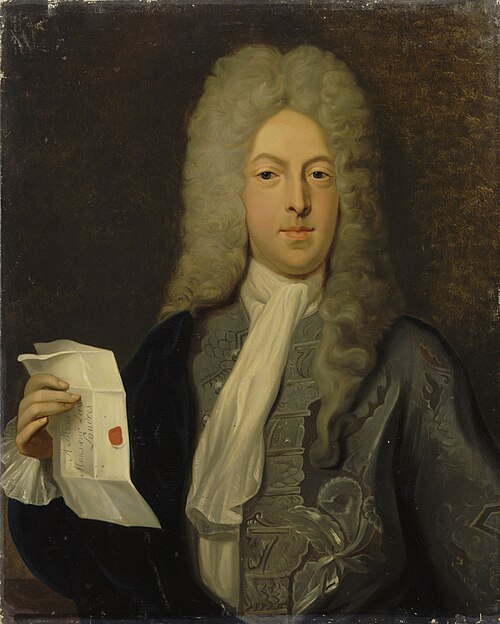
John Law was born in Edinburgh in 1671, the son of a prosperous goldsmith-banker. Tall, handsome, and possessed of a formidable mathematical mind, Law received a thorough education in banking and finance at his father's firm before departing for London at the age of twenty-one. There he lived as a dandy and gambler, his facility with numbers giving him a persistent edge at the card tables. In 1694, he killed a man named Edward Wilson in a duel over a woman and was convicted of murder. He escaped from prison and fled to the Continent, beginning a long exile during which he traveled through Amsterdam, Venice, Genoa, and Paris, studying the financial systems of Europe's most sophisticated economies.
During these wandering years, Law developed a radical monetary theory. He observed that the Dutch Republic and England were flourishing in part because of their sophisticated banking systems and use of paper credit. Scotland and France, by contrast, suffered from chronic shortages of metallic currency that constrained trade and economic growth. Money, Law concluded, was not inherently valuable — it was a medium of exchange whose quantity could be managed to promote prosperity. He proposed that a state-backed bank could issue paper notes secured by the value of land, expanding the money supply to stimulate commerce. These ideas, articulated in his 1705 treatise Money and Trade Considered, anticipated concepts that would not be widely accepted for another two centuries.
France on the Brink
Law's opportunity came in 1715, when Louis XIV died and left France on the verge of bankruptcy. The Sun King's wars had accumulated a national debt of approximately 3 billion livres, while annual government revenue amounted to only about 145 million livres — the interest burden alone consumed virtually the entire state income. Philippe d'Orleans, the Regent governing France on behalf of the five-year-old Louis XV, was desperate for solutions. He had already tried defaulting on some obligations and debasing the coinage, but the economy continued to stagnate.
Law presented his plan to the Regent in 1716 and received permission to establish the Banque Generale, a private bank authorized to issue banknotes. Capitalized at 6 million livres — divided into shares of 1,000 livres, of which three-quarters could be paid in government debt — the bank effectively allowed Law to monetize the state's obligations. Its notes were redeemable in coin of fixed weight and fineness, making them more reliable than the metallic currency, which the government frequently debased. Merchants and tax collectors quickly adopted the banknotes, and the increased money supply stimulated trade. The experiment appeared to be working brilliantly.
In December 1718, the Regent converted the Banque Generale into the Banque Royale, a state institution with Law as director — a fateful transformation. Notes were now guaranteed by the crown rather than by Law's personal capital, removing the last constraint on issuance. The temptation to print money to solve the government's fiscal problems — a temptation that has destroyed currencies from ancient Rome to Weimar Germany — now had an institutional vehicle.
Building the Mississippi Company
Simultaneously, Law was constructing a commercial empire. In August 1717, he acquired the Company of the West, a moribund trading company holding the monopoly on commerce with France's Louisiana territory and the Mississippi River valley. He renamed it the Mississippi Company and began promoting Louisiana as a land of boundless riches — gold, silver, fertile soil, and docile native populations eager to trade. Much of this was fantasy. Louisiana was a mosquito-ridden wilderness with a European population of fewer than 700 settlers, and no significant mineral wealth had been discovered.
Between 1718 and 1720, Law systematically absorbed virtually every major French trading company into the Mississippi Company: the East India Company, the China Company, the Senegal Company, and the African Company, creating a single monopolistic entity controlling all of France's overseas trade. He then secured the tobacco monopoly, the right to collect indirect taxes, and finally — in August 1719 — the right to collect all direct taxes. What had begun as a colonial trading venture had become, in effect, the French state's commercial and fiscal agent.
| Date | Event | Share Price (Livres) |
|---|---|---|
| Aug 1717 | Company of the West founded | 500 |
| Jun 1719 | East India Company absorbed | 1,000 |
| Jul 1719 | Tax collection rights acquired | 2,750 |
| Aug 1719 | New share issues begin | 5,000 |
| Dec 1719 | Peak speculation | 10,000 |
| May 1720 | First devaluation decree | 9,000 |
| Sep 1720 | Paper money system collapses | 2,000 |
| Dec 1720 | Law flees France | 1,000 |
Mania Seizes Paris
To finance these acquisitions, Law issued new shares in successive waves, each at higher prices than the last. Shares from the original 1717 offering at 500 livres were called the meres (mothers). New shares issued in June 1719 at 550 livres were called the filles (daughters), and a third issue in July at 1,000 livres became the petites-filles (granddaughters). Each new issue could only be purchased by holders of previous issues, creating a built-in demand structure that pushed prices relentlessly upward.
At the center of this machinery sat the relationship between the Mississippi Company and the Banque Royale. Investors could purchase shares with banknotes, and the Banque Royale would then issue more notes to fund further share purchases. Money creation and share price appreciation fed each other in a self-reinforcing loop — a dynamic that modern observers would recognize as a classic example of momentum-driven speculation. By late 1719, Mississippi Company shares had reached 10,000 livres, twenty times their original price.
Speculation consumed all levels of French society. The Rue Quincampoix in Paris, where shares were traded, became so crowded that a hunchback reportedly earned a living by renting out his back as a writing desk for speculators signing contracts. Servants became millionaires — the word "millionaire" itself entered the French language during this period. A coachman who had made a fortune in Mississippi shares was said to have hired two new coachmen to drive him around Paris. The Regent's own mother, the Princess Palatine, wrote with undisguised contempt of the "Mississippi madness" that had seized the court: "It is inconceivable what immense wealth is possessed by those who were formerly beggars."
Source: Reconstructed from Murphy (1997) and Velde (2003)
Paper Money Devours Itself
The system's fatal weakness was that the paper money supply had expanded far beyond anything the real economy could support. By early 1720, the Banque Royale had issued over 2.6 billion livres in notes, while the total metallic money supply of France was estimated at only 1.2 billion livres. Informed observers began converting their paper profits into gold, silver, and tangible assets — the Prince de Conti reportedly sent three wagons to the Banque Royale to convert his notes into coin, provoking a public sensation.
Law responded with increasingly desperate measures. In February 1720, he banned the possession of more than 500 livres in gold or silver coin, forcing the population to use banknotes. In March, he prohibited the manufacture of gold and silver objects above a certain weight. These measures, far from restoring confidence, deepened the panic. When a government compels its citizens to use a currency at gunpoint, the signal is unmistakable: the currency is not worth what the government claims.
On May 21, 1720, Law struck the decisive blow against his own system. He issued a decree halving the face value of banknotes over a series of scheduled reductions, intending to gradually deflate the paper money supply. The effect was catastrophic. An official admission that the government's own money was worth less than its face value triggered a universal rush to convert notes into coin. Crowds besieged the Banque Royale — there were reports of people being trampled to death in the crush. The decree was revoked within a week, but confidence was irretrievably shattered.
Exile and Aftermath
Law was dismissed from his positions in May 1720 and fled France in December, dying in poverty in Venice in 1729. The Mississippi Company was reorganized and eventually liquidated. Thousands of investors were ruined, though modern scholarship — particularly the work of Antoin Murphy — has argued that the overall economic damage was less catastrophic than traditionally portrayed, since much of the wealth that was "lost" had been fictional paper gains rather than real resources.
The deeper legacy was psychological and institutional. France emerged from the Mississippi Bubble with a profound suspicion of paper money and banking innovation that would persist for generations. While Britain — which experienced its own South Sea Bubble in the same year — went on to develop the world's most sophisticated banking system centered on the Bank of England, France did not establish a comparable central bank until Napoleon founded the Banque de France in 1800, eighty years later. French savers hoarded gold and distrusted financial intermediaries well into the twentieth century.
For students of financial history, the Mississippi Bubble illuminates dynamics that have repeated themselves with eerie consistency across three centuries. When a central authority expands the money supply to support asset valuations, the result is invariably a bubble that ends in a crash — a pattern visible from Law's paper livres to the quantitative easing programs of the twenty-first century. Concentrating fiscal, monetary, and commercial power in a single entity — as Law did with the Mississippi Company — creates fragility that no amount of individual brilliance can manage. And speculative manias tend to cluster across geographies: the Mississippi Bubble and the South Sea Bubble occurred simultaneously, just as the dot-com bubble of the 1990s was a global phenomenon. Euphoria, like panic, is contagious — but it was Law's particular genius, and his tragedy, to have built the machine that manufactured both.
Related
Historical records Learn more about our methodology.