The Sixth Great Power
Few financial institutions have ever commanded the reverence that surrounded Baring Brothers & Co. at its zenith. Founded in 1762 by Sir Francis Baring, the firm rose through the turbulent decades of the late eighteenth century to become one of London's preeminent merchant banks. It arranged the financing for the Louisiana Purchase in 1803 — the deal through which the United States acquired 828,000 square miles from Napoleonic France for $15 million. It bankrolled governments on both sides of the Atlantic during the Napoleonic Wars and their aftermath. By the 1820s, the Duc de Richelieu reportedly described the great powers of Europe as England, France, Austria, Prussia, Russia, and Baring Brothers (Ziegler, 1988).
That comparison was only half-ironic. Barings operated at the intersection of sovereign finance and imperial expansion throughout the nineteenth century, underwriting loans for governments from Canada to Argentina, from the Ottoman Empire to the United States. It was banker to the British Crown. Generations of Barings served in Parliament and the House of Lords. When a foreign government needed access to the London capital market — then the deepest pool of investable wealth on earth — it went to Barings.
By the 1880s, however, that extraordinary reputation had begun to outrun the prudence that built it.
Argentina's Gilded Mirage
To understand how Barings nearly destroyed itself, one must first understand the Argentina of the 1880s — a country intoxicated by its own potential. After decades of civil war and political instability, Argentina had unified under a strong central government and embarked on an ambitious program of modernization. Railways were the centerpiece. Between 1880 and 1890, Argentina's rail network expanded from roughly 2,500 kilometers to over 9,400 kilometers, almost all of it financed by British capital (Ferns, 1960).
British investors poured money into Argentine railway companies, land mortgage banks, provincial government bonds, and public works projects with an enthusiasm that bordered on mania. Argentina was the emerging market darling of the late Victorian era — a vast, fertile country with seemingly limitless agricultural potential and a government eager to attract foreign investment at almost any cost. Buenos Aires boomed. Land prices soared. New neighborhoods sprang up on the pampas, financed by bonds sold in London drawing rooms.
| Year | British Capital Invested in Argentina (£ millions) | Argentine Rail Network (km) |
|---|---|---|
| 1880 | 20 | 2,516 |
| 1885 | 46 | 4,541 |
| 1887 | 80 | 6,709 |
| 1889 | 150 | 8,314 |
| 1890 | 157 | 9,432 |
Much of this capital flowed through Baring Brothers. Edward Baring, who became the first Lord Revelstoke in 1885, drove the firm's Argentine strategy with a conviction that blurred into recklessness. Under his leadership, Barings did not merely arrange Argentine bond issues for other investors — it underwrote them, meaning the firm committed to purchasing any unsold bonds itself. In a rising market, this was enormously profitable. In a falling one, it was a death sentence.
Lord Revelstoke's Gamble
Edward Baring was no rogue trader operating in the shadows. He was the senior partner of Britain's most prestigious banking house, a man of impeccable social credentials and considerable political influence. His mistake was not deception but hubris — an unshakeable belief that Argentina's trajectory was a straight line upward and that Barings' reputation alone could sustain investor confidence indefinitely.
Through the late 1880s, warning signs accumulated. Argentina's government under President Miguel Juarez Celman had financed its expansion through a combination of foreign borrowing and currency emission that was stoking dangerous inflation. The peso, nominally pegged to gold, was depreciating rapidly in practice. A measure called the gold premium — the percentage by which paper pesos traded below their supposed gold value — climbed relentlessly. In 1885 the gold premium stood at roughly 37 percent. By 1889 it had surged past 100 percent, meaning paper currency had lost more than half its value against gold (della Paolera and Taylor, 2001).
Provincial governments, many of them deeply corrupt, were issuing their own bonds and flooding the London market. Quality deteriorated as quantity expanded. British investors, dazzled by high yields and encouraged by the prestige of the houses arranging the issues, asked few questions. Barings, rather than pulling back, doubled down.
The critical miscalculation came in 1888, when Barings underwrote a £2 million bond issue for the Buenos Aires Water Supply and Drainage Company. It was a mundane public utility deal, but the timing was terrible. Investor appetite for Argentine securities had begun to cool. When the bonds went to market in early 1889, they did not sell. Barings was left holding the unsold paper on its own balance sheet — a position that would have been uncomfortable for a large bank and was potentially lethal for a partnership whose capital was measured in the low millions of pounds.
Rather than acknowledging the market's verdict and marking down its exposure, Barings continued underwriting new Argentine issues. Lord Revelstoke apparently believed that a temporary hesitation in the market could be overcome by sheer force of institutional prestige. He was wrong.
Revolution and Ruin in Buenos Aires
Argentina's crisis arrived with dramatic violence. By mid-1890, inflation was ravaging the urban middle class, the gold premium had reached catastrophic levels, and public anger at the Juarez Celman government's corruption and incompetence had boiled over. On July 26, 1890, a civic-military uprising known as the Revolution of the Park erupted in Buenos Aires. Though the rebellion was ultimately suppressed militarily, it achieved its political objective — Juarez Celman resigned in August, replaced by his vice president, Carlos Pellegrini.
Pellegrini inherited an economy in freefall. The Banco Nacional and the Banco de la Provincia de Buenos Aires — two of Argentina's largest domestic banks — were effectively insolvent, propped up only by government money printing that accelerated inflation further. Foreign investors, watching revolution in the streets and currency collapse on the exchanges, fled Argentine securities en masse. Bond prices, already declining through 1889, went into freefall.
For Baring Brothers, eight thousand miles away in London, each decline in Argentine bond prices eroded the value of the enormous portfolio it could not sell. The firm's Argentine exposure had grown to roughly £21 million — an almost incomprehensible sum for a partnership whose own capital amounted to perhaps £3 million. Barings was leveraged at something like seven to one against a single country's debt, a concentration of risk that would horrify any modern risk manager but that seemed, to Lord Revelstoke, merely a reflection of the firm's deep expertise in Latin American finance.
The Confession
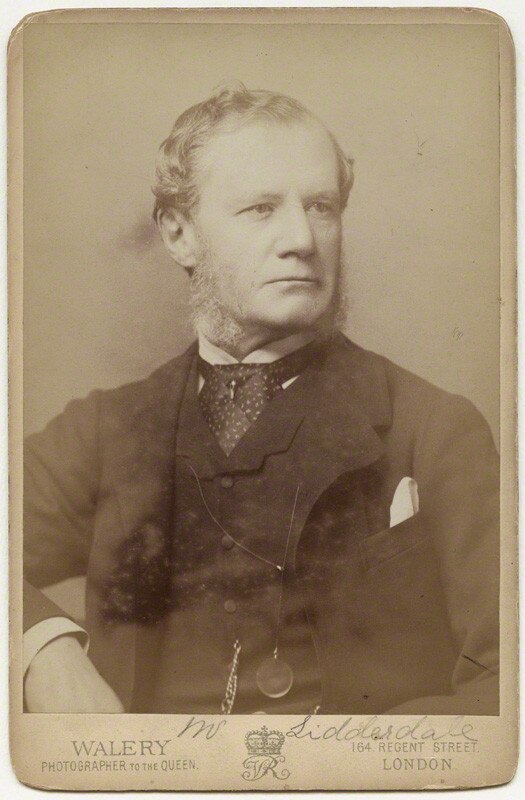
On Saturday, November 8, 1890, Edward Baring went to see William Lidderdale, the Governor of the Bank of England, and delivered the news that Barings could not meet its obligations. The firm's acceptances — bills of exchange that Barings had guaranteed and that were circulating throughout the London money market — totaled approximately £21 million. When these bills matured and holders presented them for payment, Barings would default.
Lidderdale grasped immediately that this was not merely a problem for one bank. Baring Brothers' acceptances were held by banks, discount houses, and financial institutions across London and indeed across Europe. A Barings default would mean that every institution holding its paper would suffer losses, triggering a chain reaction of failures that could bring down the entire City of London. The Long Depression had already weakened confidence in global markets. A collapse of this magnitude could plunge Britain — and the world — into a far deeper crisis.
What Lidderdale understood, perhaps more clearly than anyone else in that moment, was the distinction between illiquidity and insolvency. Barings' Argentine assets were not worthless. The bonds, the railway shares, the land mortgages — they had real underlying value. Argentina was not going to disappear. Its railways would still carry grain to the ports. Its pampas would still grow wheat. But these assets could not be turned into cash quickly enough to meet the avalanche of maturing obligations. Barings was illiquid, not insolvent. It had good assets and bad timing.
That distinction made a rescue conceivable. If someone could provide enough cash to meet Barings' obligations while its assets were gradually liquidated at fair value rather than fire-sale prices, every creditor could be made whole and the financial system could be preserved.
Lidderdale's Forty-Eight Hours
What followed was the most consequential weekend in nineteenth-century finance. Lidderdale had to assemble a guarantee fund large enough to cover Barings' liabilities, and he had to do it before the markets opened on Monday morning.
He began by approaching the largest joint-stock banks and merchant houses in London. His pitch was blunt: if Barings failed, the resulting panic would destroy institutions far larger than Barings itself. Contributing to a rescue fund was not charity — it was self-preservation. The major clearing banks — Glyn, Mills & Co., the Union Bank of London, Lloyds — committed funds. So did the great merchant banking rivals: J.S. Morgan & Co., Hambros, and eventually, after considerable pressure, the Rothschilds.
The Rothschild banking dynasty had particular reason for ambivalence. Nathan Rothschild, the head of the London house, bore no love for Barings — the two families had been competitors for a century. Rothschilds had maintained a more cautious approach to Argentine exposure and saw no reason why their prudence should subsidize Barings' recklessness. Initially, Nathan Rothschild refused to participate.
Lidderdale applied pressure through every available channel. He made clear that the Bank of England would commit its own reserves — but that those reserves alone were insufficient. He warned that a Barings collapse would not distinguish between the prudent and the reckless; the contagion would swallow everyone. Eventually, the Rothschilds relented and joined the consortium, bringing not only their own commitment but their unmatched international network.
Through that network, Rothschilds helped arrange a critical component of the rescue: a £3 million gold loan, with £1.5 million from the Banque de France and £1.5 million from the Russian State Bank. This foreign gold was essential — it replenished the Bank of England's reserves, which had been drained by the crisis, and demonstrated to the market that the rescue had international backing.
By Monday morning, Lidderdale had assembled a guarantee fund of £17.1 million. The Bank of England itself contributed £1 million. The remaining £16.1 million came from the consortium of banks and financial houses. It was, in effect, the first coordinated central bank rescue in modern financial history — a predecessor to the operations that J.P. Morgan would execute during the Panic of 1907 and that the Federal Reserve would undertake during the crisis of 2008.
Why the Rescue Worked
Barings was restructured. The old partnership was dissolved, and a new entity — Baring Brothers & Co., Limited — was incorporated as a joint-stock company with limited liability. The Baring family contributed significant personal assets to the restructuring. Lord Revelstoke, humiliated but not bankrupt in the personal sense, stepped down from the firm's leadership.
The guarantee fund functioned precisely as Lidderdale had intended. Barings' obligations were met as they matured. Its Argentine assets, held in a liquidating trust, were sold gradually over the next several years as market conditions improved. By the time the trust was wound up, the guarantors had been repaid in full, with interest. No bank in the consortium lost money on the rescue.
This outcome validated Lidderdale's central insight: the distinction between a liquidity crisis and a solvency crisis. Because Barings' assets had genuine underlying value, providing temporary liquidity allowed the firm to avoid a forced liquidation that would have destroyed value for everyone — creditors, counterparties, and the broader financial system alike. It was a lesson that would be relearned, painfully, in every subsequent financial crisis.
| Component of the Rescue | Amount (£ millions) |
|---|---|
| Bank of England contribution | 1.0 |
| London bank consortium guarantee | 16.1 |
| Gold loan from Banque de France | 1.5 |
| Gold loan from Russian State Bank | 1.5 |
| Baring family personal contribution | ~1.0 |
Argentina's Lost Decade
If the rescue saved London, it did nothing for Buenos Aires. Argentina entered the 1890s in economic catastrophe. Real GDP contracted sharply between 1890 and 1891. The banking system, already fragile, effectively collapsed — the Banco Nacional was liquidated in 1891, and the Banco de la Provincia de Buenos Aires required a prolonged restructuring. Immigration, which had been running at record levels during the boom years, slowed dramatically as economic opportunity evaporated.
President Pellegrini negotiated with European creditors to restructure Argentina's sovereign debt, eventually reaching an agreement in 1893 known as the Romero Arrangement. Interest payments were reduced and maturities extended, but the cost was a decade of fiscal austerity and depressed living standards. Argentina's later collapse in 1998-2002 would echo many of the same patterns: foreign capital flooding in during good times, overvalued currency, excessive sovereign borrowing, and a sudden reversal that left the country locked out of international capital markets.
The political consequences were equally profound. The crisis discredited the liberal economic elite that had governed Argentina during the boom years and fueled the rise of the Radical Civic Union, which would eventually win power in 1916 under Hipolito Yrigoyen. Argentina's relationship with foreign capital — particularly British capital — was permanently altered. The trust that had allowed British investors to pour £157 million into a single South American country was broken, and it would never fully recover.
The Shadow of 1890: From Lidderdale to Leeson
Baring Brothers survived its near-death experience of 1890 and continued operating for another century, rebuilding its reputation and its balance sheet under more cautious leadership. The firm's later history is both a testament to institutional resilience and a bitter irony. In February 1995 — almost exactly 105 years after Lidderdale's rescue — Barings collapsed again, this time destroyed by the unauthorized trading of Nick Leeson in the Singapore derivatives market. The losses totaled £827 million, more than twice the firm's capital. But in 1995, unlike 1890, no rescue came.
The contrast between the two episodes illuminates how much — and how little — had changed in a century of financial evolution. In 1890, Barings was illiquid but solvent; its assets were good, and a temporary bridge could save it. In 1995, Barings was both illiquid and insolvent; Leeson's losses were real and irrecoverable. In 1890, Lidderdale could credibly argue that rescuing Barings was rescuing the system. In 1995, the Bank of England concluded that Barings was small enough to fail without systemic consequences — a judgment that proved correct, as ING purchased the wreckage for £1 and the financial system barely noticed.
The Template for Modern Crisis Management
The Baring Crisis of 1890 established principles that remain central to financial crisis management more than a century later. Lidderdale's rescue created the operational playbook: identify the systemic risk, distinguish between illiquidity and insolvency, assemble a coalition of private institutions with public backstop, provide temporary liquidity rather than permanent subsidy, and ensure that the rescued institution's shareholders bear consequences.
J.P. Morgan followed an almost identical script during the Panic of 1907, assembling New York's bankers in his library to pledge funds that would halt a cascading bank run. The Federal Reserve's creation in 1913 institutionalized what Lidderdale and Morgan had improvised — a permanent lender of last resort that would not have to scramble for funds in the middle of a crisis (Kindleberger, 2000). And in 2008, when the failure of Lehman Brothers demonstrated what happens when the authorities decline to rescue a systemically important institution, policymakers returned to Lidderdale's playbook for the bailouts that followed — AIG, Citigroup, the TARP program — all variations on the theme that Lidderdale had composed in a frantic weekend 118 years earlier.
What the Baring Crisis also established, less comfortably, was the problem of moral hazard. If Barings could take enormous concentrated bets on a single country's debt and be rescued when those bets went wrong, what incentive did any bank have to exercise prudence? Lord Revelstoke lost his position but not his fortune. The Baring family continued in banking. The lesson that markets absorbed was not "don't take excessive risks" but "don't take excessive risks unless you are large enough and interconnected enough that the authorities cannot afford to let you fail."
That lesson — corrosive, persistent, and still unresolved — is the most durable legacy of a November weekend in 1890 when the Governor of the Bank of England looked into the abyss and decided that the cost of rescue, however steep, was less than the cost of letting the oldest merchant bank in Britain drag the world's financial capital into the dark.
Related
Historical records Learn more about our methodology.