The Iron Horse Arrives
On September 15, 1830, the Liverpool and Manchester Railway opened for regular passenger service — the first inter-city line in the world to rely entirely on steam locomotion. The occasion was marred by tragedy: William Huskisson, the Member of Parliament for Liverpool, was struck and killed by Stephenson's Rocket during the opening ceremony, becoming perhaps the first prominent victim of the machine age. But commercial success was immediate. Within its first year, the railway carried over 400,000 passengers and generated revenues that shattered every projection. Returns on invested capital approached 10 percent, at a time when government bonds yielded roughly 3.5 percent.
That gap between railway returns and bond yields would prove to be the spark for one of history's great speculative fires. Railways were no fraud — they represented arguably the most important technological advance since the printing press, a technology that would slash the cost of overland transportation by 90 percent, redraw the geography of economic life, and generate enormous real wealth over the coming century. But the magnitude of the genuine opportunity attracted capital far beyond what could be productively deployed, and the gap between what the railways were actually worth and what investors were willing to pay for them grew into a chasm.
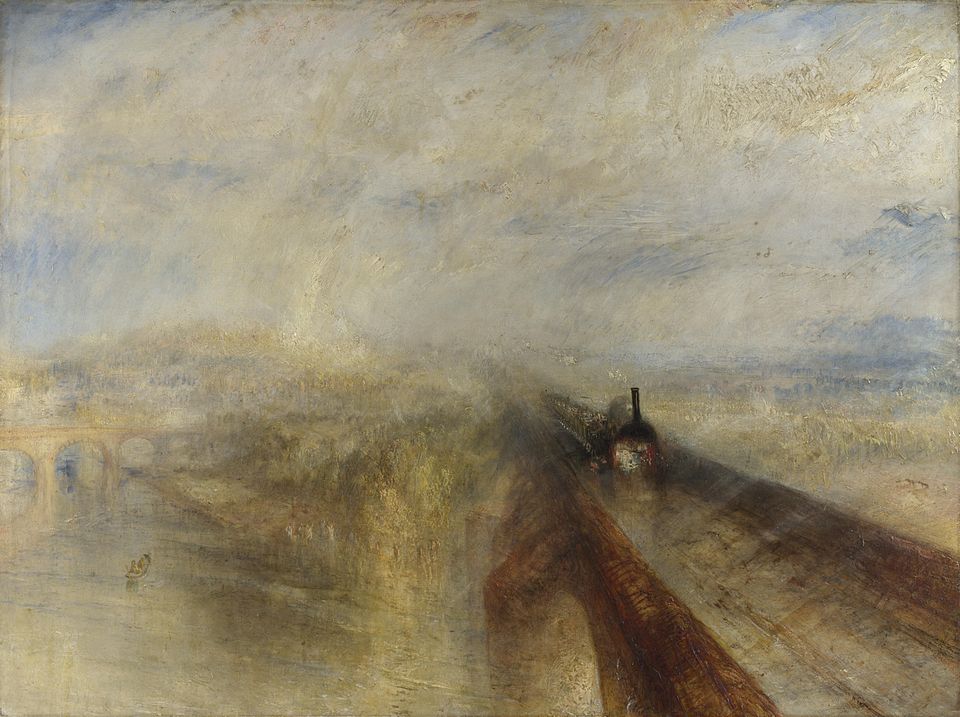
A Dress Rehearsal: 1835-1837
A modest speculative boom in railway shares flared in the mid-1830s, driven by the success of the Liverpool and Manchester line and the launch of ambitious new projects — the London and Birmingham Railway, the Great Western Railway. Parliament authorized 59 new railway companies in 1836 and 1837 as investors clamored for allocations in new offerings, and a secondary market in railway scrip (partially paid shares requiring further installments) developed rapidly.
This first boom collapsed in the financial crisis of 1837, triggered by a broader contraction in credit linked to the American panic of that year. Share prices fell, speculative schemes were abandoned, and the mania subsided. But the core companies survived, completed their lines, and demonstrated that railways could produce reliable income. A template had been established — one that would repeat on a vastly larger scale within a decade.
George Hudson: The Railway King
No figure embodied Railway Mania more completely than George Hudson, a York draper who parlayed a modest inheritance into control of a railway empire. Hudson entered the business in the mid-1830s by promoting the York and North Midland Railway. He possessed no engineering expertise and limited financial sophistication, but he had two skills that mattered more: an instinct for political manipulation and an understanding that investors follow dividends.
Through aggressive acquisition — purchasing or merging with competing and connecting lines — Hudson assembled an integrated network of approximately 1,450 miles of track by the mid-1840s, roughly a quarter of the British total. Known throughout the country as the Railway King, he won a seat in Parliament, entertained the aristocracy at lavish estates, and wielded influence rivaling that of cabinet ministers.
What his shareholders did not know was that Hudson was paying those generous dividends not from operating profits but from capital raised through new share issues — a scheme that a later age would recognize as a Ponzi structure. He capitalized expenses, inflated revenues, and concealed losses through transfers between the companies he controlled. "I have been the means of bringing together large bodies of shareholders, and if I have been the means of paying them good dividends," Hudson later protested, "is that any reason why I should be attacked?" His investors would eventually answer that question for him.
The Mania Proper: 1844-1846
Three converging forces ignited Railway Mania in 1844. The Bank of England had cut its discount rate to 2.5 percent — the lowest in its history — making government bonds unattractive and driving investors toward higher-yielding alternatives. Existing railway companies had generated genuine enthusiasm for the technology through years of reliable service. And Gladstone's Railway Act of 1844, by establishing a regulatory framework, paradoxically encouraged new promotions by lending the industry an air of legitimacy.
Capital flooded in. Parliament received 199 petitions for new railway companies in 1844; 562 in 1845; 815 in 1846. At the peak, Parliament authorized 272 new railway acts representing 9,500 miles of new track and capital commitments of approximately 132 million pounds — equivalent to roughly half the national income. Railway investment reached about 7 percent of GDP by 1847, a level of infrastructure spending that modern economists compare to wartime mobilization.
| Year | Railway Acts Passed | New Miles Authorized | Capital Authorized (£ millions) |
|---|---|---|---|
| 1843 | 24 | 90 | 3.9 |
| 1844 | 48 | 805 | 20.5 |
| 1845 | 120 | 2,896 | 59.5 |
| 1846 | 272 | 9,500 | 132.6 |
| 1847 | 184 | 5,391 | 93.1 |
Speculation extended far beyond the professional investor class. Partially paid shares — requiring only a fraction of face value upon subscription, with the remainder due in installments — made railway scrip accessible to middle-class savers, clergymen, widows, even servants. Charlotte Bronte invested her modest literary earnings in railway shares. So did countless doctors, solicitors, and retired military officers who formed the backbone of Victorian society. A booming periodical press — the Railway Times, Herapath's Railway Journal, and dozens of imitators — fanned enthusiasm with breathless coverage of new schemes and rising prices.
Source: Railway share price index (1844=100), derived from Campbell and Turner (2010)
Collapse
In the autumn of 1845, the Bank of England raised its discount rate in response to a drain on gold reserves, and the bubble began to deflate. Higher rates made the installment payments on partially paid shares more burdensome and shifted the calculus between railway scrip and safer investments. Prices fell slowly at first, then with gathering momentum through 1846 and into 1847.
External shocks compounded the damage. The Irish famine of 1845-1847 strained the British economy and the public purse; the European revolutions of 1848 shook investor confidence across the continent. Many railway companies found themselves unable to raise the capital needed to complete their authorized lines. Contractors went unpaid, construction halted, and shares in unfinished railways became worthless. By 1850, railway share prices had fallen on average by roughly two-thirds from their 1845 peaks. Thousands of middle-class families were ruined — people who had invested not out of greed but out of genuine belief in a technology that was, in fact, transforming their world.
Hudson's empire crumbled with the market. In 1849, shareholder committees from several of his companies investigated his accounts and uncovered systematic fraud: dividends paid from capital, inflated asset valuations, personal profiteering from insider transactions. Stripped of his chairmanships, expelled from respectable society, and eventually imprisoned for debt, Hudson died in obscurity in 1871 — a cautionary tale in behavioral overconfidence and the thin line between visionary promotion and outright fraud.
The Paradox of Productive Bubbles
Railway Mania left behind a wreckage of personal fortunes. It also left behind something of immense and lasting value: a national railway network. By 1855, Britain had over 8,000 miles of track, creating an integrated transportation system that accelerated the Industrial Revolution and reshaped daily life for millions. Much of this network was built with capital that would never earn a return for the investors who provided it — the railways were enormously valuable to the economy as a whole, even as they proved terrible investments for many individual shareholders.
This paradox — speculative bubbles destroying investor wealth while creating real economic infrastructure — has recurred throughout financial history. The dot-com bubble of the late 1990s financed the laying of fiber-optic cable and the creation of companies like Amazon and Google that would transform the global economy. The tulip mania of 1637, by contrast, produced nothing but expensive compost. Railway Mania sits firmly in the productive-bubble category: financially ruinous for thousands, economically transformative for millions.
Victorian investors who bought railway shares at the 1845 peak and held them for decades often earned mediocre returns on their original investment. But the cook who could now travel from Manchester to London in a few hours instead of a few days, the farmer who could ship perishable goods to distant markets overnight, the factory owner who could source raw materials from across the country at a fraction of the old cost — for them, the mania's legacy was not ruin but revolution. The money was lost. What it built endured.
Related
Historical records Learn more about our methodology.