From the Judengasse to the Courts of Europe
In the cramped, walled ghetto of Frankfurt's Judengasse, where Jewish families had been confined since 1462, a coin dealer named Mayer Amschel Rothschild began laying the foundations for what would become the most powerful banking dynasty in history. Born in 1744, Mayer Amschel started his career trading rare coins and antiquities to the nobility, eventually winning the patronage of Crown Prince Wilhelm of Hesse-Kassel, one of the wealthiest rulers in the Holy Roman Empire. Wilhelm's fortune, much of it earned by renting Hessian soldiers to the British Crown, required sophisticated financial management. By the 1790s, Mayer Amschel had graduated from coin dealer to court factor, handling currency exchange, bill discounting, and eventually the management of portions of Wilhelm's vast portfolio.1
What distinguished Mayer Amschel from hundreds of other court Jews scattered across German principalities was his vision for succession. Rather than concentrating the business in a single city, he conceived a plan of startling ambition: each of his five sons would establish an independent banking house in a different European capital, bound together by family loyalty, shared capital, and a private communication network that no government could match.
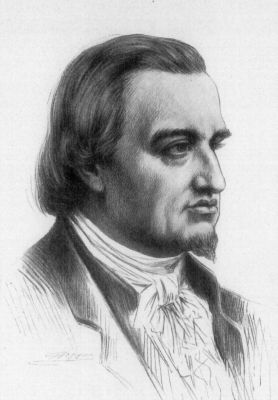
Five Brothers, Five Cities
Between 1798 and 1820, the Rothschild sons fanned out across the continent. Amschel Mayer remained in Frankfurt, inheriting the original firm. Nathan Mayer, the most aggressive and talented of the brothers, had already departed for England in 1798, initially to trade textiles in Manchester before moving to London and establishing N M Rothschild & Sons. James Mayer (Jakob) settled in Paris in 1812, founding de Rothschild Freres. Salomon Mayer went to Vienna in 1820, and Carl Mayer established operations in Naples around the same period.
| Brother | City | Bank Founded | Primary Specialization |
|---|---|---|---|
| Amschel Mayer | Frankfurt | M A Rothschild & Sohne | German state financing, original family base |
| Nathan Mayer | London | N M Rothschild & Sons | British government bonds, gold bullion |
| James Mayer (Jakob) | Paris | de Rothschild Freres | French rentes, railway concessions |
| Salomon Mayer | Vienna | S M von Rothschild | Habsburg government debt, railways |
| Carl Mayer | Naples | C M de Rothschild e Figli | Italian state bonds, Mediterranean trade |
Each house was legally independent yet operationally intertwined. Profits were pooled according to partnership agreements renegotiated every few years. Capital flowed freely between the five firms, allowing any single brother to marshal the resources of the entire network at short notice. When Nathan needed to transfer 600,000 pounds to Wellington's army in the Iberian Peninsula during the Napoleonic Wars, he routed funds through a chain of Rothschild houses across the continent, converting currencies at each stage with a speed and efficiency that astonished the British Treasury.2
This structure was, in essence, the world's first multinational banking corporation. The Medici Bank had pioneered the concept of a branch network in the 15th century, but the Rothschilds took the model further by making each node family-controlled and capable of independent action while remaining part of a coordinated whole.
Nathan and the Waterloo Legend
No episode in Rothschild history has generated more mythology than Nathan Mayer Rothschild's actions surrounding the Battle of Waterloo on June 18, 1815. According to the popular legend, Nathan received word of Napoleon's defeat a full day before the British government, thanks to the family's private couriers. He then supposedly went to the London Stock Exchange and conspicuously sold British government consols, creating the impression that Wellington had lost. As prices plummeted in panic, Nathan's agents quietly bought up vast quantities at rock-bottom prices. When official news of the victory arrived and prices soared, Nathan allegedly reaped an enormous fortune.
The reality, as Niall Ferguson has demonstrated through archival research, was considerably less dramatic but still remarkable. Nathan did receive news of Waterloo ahead of the government; his courier, a man named Rothworth, crossed the English Channel from Ostend on the night of June 19 and reached Nathan in London on June 20, a full day before Major Henry Percy delivered Wellington's official dispatch. Nathan informed the government of the outcome before they received their own confirmation.3
Whether Nathan traded on this information advantage is debated among historians. Ferguson's analysis of the Rothschild archives suggests Nathan did purchase consols before prices rose on the official announcement, but the scale was far more modest than the myth suggests, and there is no evidence of the deliberate deception that the legend describes. What the episode truly illustrates is not villainy but infrastructure: the Rothschilds had built an information network that consistently outperformed the communications apparatus of the most powerful governments in Europe.
Financing Sovereigns: War Bonds and French Reparations
The Napoleonic Wars and their aftermath transformed the Rothschilds from prosperous merchants into the undisputed titans of European finance. Governments at war needed money on a scale that no individual lender could provide. Nathan's role in channeling British subsidies to allied armies on the continent proved the family's ability to move capital across borders under the most difficult conditions imaginable.
After Napoleon's final defeat, the Rothschilds played a central role in the financial reconstruction of Europe. France, under the terms of the peace settlement, was required to pay 700 million francs in reparations to the allied powers. In 1817 and 1818, the Rothschilds underwrote massive French government bond issues — the rentes — that allowed France to raise the necessary capital on international markets. These operations were conducted simultaneously across London, Paris, Frankfurt, and Vienna, with each Rothschild house placing bonds with investors in its local market. The coordinated scale of these transactions was unprecedented in financial history.4
Source: Ferguson, The House of Rothschild (1998); Homer & Sylla, A History of Interest Rates
By the mid-1820s, the Rothschilds had become the dominant force in European sovereign debt. They underwrote bonds for Austria, Prussia, Russia, Naples, Brazil, and numerous smaller states. Their method was consistent: they purchased entire bond issues from governments at a discount, then distributed the bonds through their pan-European network, earning the spread between the purchase price and the price paid by end investors. This underwriting model, which the Rothschilds did not invent but perfected at continental scale, remains the foundation of investment banking today.
The Courier Network That Outpaced Governments
Central to the Rothschilds' competitive advantage was their private courier system — a network of messengers, carrier pigeons, fast boats, and relay riders that transmitted commercial and political intelligence between the five houses faster than any government postal service. Letters between London and Paris, which might take three to five days through official channels, reached Rothschild offices in as little as twenty-four hours.
This information advantage was not merely about speed. The brothers developed a system of coded correspondence that compressed complex financial intelligence into cryptic shorthand, making intercepted letters useless to outsiders. They also shared political intelligence with each other — assessments of government stability, impending policy changes, military developments — that allowed each house to position itself ahead of market-moving events. In an era before the telegraph, which did not become commercially widespread until the 1850s, this network represented an almost unfair advantage. Governments came to rely on Rothschild intelligence; Metternich in Vienna and Wellington in London both regularly received political updates from Rothschild sources before their own diplomats could report.
Railways: The Iron Backbone of Rothschild Wealth
As the age of sovereign war finance gave way to the industrial revolution, the Rothschilds pivoted seamlessly into what would become the defining infrastructure investment of the 19th century: railways. James de Rothschild in Paris took the lead, securing the concession for the Chemin de Fer du Nord — the railway linking Paris to the Belgian border and eventually to the Channel ports — in 1845. This single investment would generate enormous returns and cement the Paris house's dominance of French infrastructure finance.
Salomon in Vienna financed the Kaiser Ferdinands Nordbahn, linking Vienna to the coal-rich regions of Moravia. Carl in Naples supported Italian railway ventures. Across the continent, Rothschild capital helped lay the iron arteries that transformed European commerce and warfare alike. Ferguson estimates that between 1830 and 1870, the five Rothschild houses were involved in financing a substantial share of all European railway construction, though exact figures are difficult to determine given the complexity of syndicated financing arrangements.5
Railway financing also marked a subtle shift in Rothschild strategy. Where sovereign debt had involved lending directly to governments, railway investment required equity stakes, construction management, and operational oversight. The Rothschilds were becoming not just bankers but industrialists, a transition that brought new risks alongside enormous profits.
The Suez Canal: Imperial Finance at Its Zenith
Perhaps the most dramatic single transaction in Rothschild history occurred on November 25, 1875, when the British Prime Minister Benjamin Disraeli needed to act fast. Ismail Pasha, the Khedive of Egypt, was on the verge of selling his 44 percent stake in the Suez Canal Company to a French consortium. Disraeli recognized the strategic imperative of British control over this vital shipping route to India, but Parliament was not in session and could not authorize the purchase.
Disraeli turned to Lionel de Rothschild, Nathan's son and head of the London house. According to well-documented accounts, when Disraeli's private secretary Montagu Corry arrived at New Court to request a loan of 4 million pounds — roughly 480 million in today's currency — Lionel asked only one question: what was the security? When told the British government itself, he agreed on the spot. N M Rothschild & Sons advanced the entire sum without parliamentary approval, enabling Britain to acquire the Canal shares before the French could act.6
The Suez transaction exemplified everything that made the Rothschilds exceptional: the ability to commit enormous sums at a moment's notice, the intimate relationship with sovereign power, and the willingness to act decisively when speed mattered more than procedure. It also illustrated the risks of private banking power — a single family had effectively determined British imperial policy without democratic authorization, a fact that did not go unnoticed by critics. When J.P. Morgan performed a comparable act of private financial rescue three decades later during the Panic of 1907, the parallels with Rothschild-era finance were unmistakable.
Decline: Nationalism, War, and the Rise of Joint-Stock Banking
The forces that eroded Rothschild dominance were already visible by the 1870s, though the full consequences would not unfold until the 20th century. Joint-stock banks — institutions owned by shareholders rather than families — were growing rapidly in every European country. Credit Lyonnais, Deutsche Bank, and Barclays could raise capital from thousands of investors and operate at a scale that even the Rothschilds could not match from family resources alone. Central banks were assuming greater control over monetary policy and government debt management, reducing the sovereign's dependence on private merchant banks.
Nationalism proved equally corrosive. The Rothschild model depended on cross-border cooperation between family members who held different citizenships and maintained loyalties to different states. As European nationalism intensified in the late 19th century, this cosmopolitan orientation attracted suspicion. Anti-Semitic conspiracy theories, which had circulated since the Waterloo myth and earlier, gained new virulence in the political culture of the 1890s.
World War I delivered the most severe blow. For the first time, Rothschild houses found themselves on opposing sides of a military conflict. The London and Paris branches supported the Entente; the Vienna branch was aligned with the Central Powers. Cross-border capital flows, the lifeblood of the Rothschild system, were severed overnight. After the war, the Austrian and German houses never fully recovered. The Nazis seized the Vienna Rothschild properties following the Anschluss of 1938, and the Frankfurt house had already been wound down.
Legacy: A Template for International Finance
The Rothschild dynasty's contribution to financial history extends far beyond the wealth they accumulated. They established the template for international investment banking — the idea that a financial institution could operate across borders, underwrite sovereign debt, distribute securities to a global investor base, and serve as an intermediary between governments and capital markets. Every modern investment bank, from Goldman Sachs to Nomura, operates within a framework that the Rothschilds helped create.
Their courier network anticipated the information-driven nature of modern finance, where milliseconds of advantage in data transmission can generate millions in profits. Their correspondent banking model, in which allied institutions in different countries maintain reciprocal accounts to facilitate cross-border payments, remains the backbone of international banking. And their experience — building an empire on family trust only to see it fractured by nationalism and war — offers a sobering reminder that financial networks, however powerful, remain vulnerable to the political forces that surround them.
By the dawn of the 20th century, the age of the private banking dynasty was ending. Joint-stock banks, central banks, and eventually the regulatory architectures emerging from crises like the Panic of 1907 would reshape finance into something more institutional and less personal. But the Rothschilds had proven a fundamental truth that endures: in finance, information, speed, and trust across borders matter more than any single transaction. Five brothers from the Frankfurt Judengasse had demonstrated that principle with a clarity that two centuries of subsequent history have only reinforced.
Related
Historical records Learn more about our methodology.
Footnotes
-
Niall Ferguson, The House of Rothschild: Money's Prophets, 1798-1848 (New York: Viking, 1998), 40-56. ↩
-
Ferguson, The House of Rothschild: Money's Prophets, 84-97. ↩
-
Ferguson, The House of Rothschild: Money's Prophets, 98-104. ↩
-
Ferguson, The House of Rothschild: Money's Prophets, 118-132. ↩
-
Niall Ferguson, The House of Rothschild: The World's Banker, 1849-1999 (New York: Viking, 1999), 156-189. ↩
-
Ferguson, The House of Rothschild: The World's Banker, 280-294. ↩