Charles Ponzi and the 1920 Postal Coupon Scheme
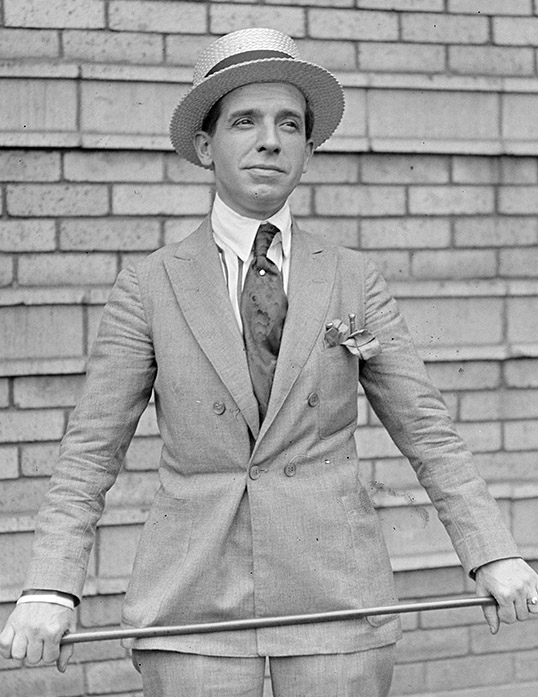
On the morning of 26 July 1920, a queue formed outside 27 School Street in Boston that wound around the corner of Pi Alley and reached as far back as the steps of City Hall. The men and women holding the line were tradespeople, fishmongers, police patrolmen, Italian seamstresses from the North End, and a sprinkling of Beacon Hill matrons. Each clutched a savings book or a fold of cash. Inside the second-floor office of the Securities Exchange Company, a small, dapper man in a straw boater shook every hand, accepted every deposit, and promised — in clear, accented English — that the money would come back in forty-five days, fifty percent richer.
By the end of that single day, Charles Ponzi had taken in roughly one million dollars (Zuckoff, 2005). The Boston Post had begun its investigation that very morning, but the line did not yet know.
From Lugo to Boston
Carlo Pietro Giovanni Guglielmo Tebaldo Ponzi was born in March 1882 in Lugo, a market town in Emilia-Romagna. His family had been postmasters under the old Papal States and had slipped into reduced gentility by the time of his birth. He attended the University of Rome La Sapienza for four years, where, by his own later account, he treated tuition money the way he would later treat reply-coupon receipts — as ready cash for cafés, cards, and tailored suits (Ponzi, 1937, autobiographical manuscript cited in Dunn, 1975). He left without a degree.
In November 1903 he sailed third-class from Naples to Boston aboard the SS Vancouver. He had two dollars and fifty cents in his pocket. He spent the next decade in motion — Pittsburgh, Paterson, Providence, Montreal, Atlanta — taking work as a dishwasher, waiter, sign painter, interpreter, and finally bank clerk. Two prison terms punctuated the drift. In 1908 the Quebec courts gave him three years at Saint-Vincent-de-Paul for forging the signature of one Damien Fournier on a $423.58 cheque drawn on the Banco Zarossi, a small Italian-immigrant bank where Ponzi had risen briefly to assistant manager (Zuckoff, 2005). In 1910 an Atlanta federal court added two years for smuggling five Italian labourers across the Quebec–New York border, in violation of immigration law.
He arrived back in Boston in 1917 a free man, broke, and thirty-five years old.
A Coupon from Spain
The accident that produced the Securities Exchange Company came in the post. In August 1919 Ponzi, then operating a small trade catalogue called the Bostonian Advertising and Publishing Company, received a letter from a possible customer in Spain. Tucked inside was an international reply coupon — a postal voucher introduced under the 1906 Universal Postal Union convention in Rome, designed so that a correspondent in one country could prepay the return postage from another. The Spanish sender had bought the coupon in pesetas at the rate fixed in Madrid. Ponzi could exchange it in Boston for a US six-cent stamp.
The numbers caught his eye. Post-armistice Europe was awash in depreciated paper. Lira, franc, mark, peseta — all had lost half or more of their pre-war value against the dollar. The UPU rate for reply coupons, however, had been set in 1906 gold parities and had not been re-floated. A coupon bought in Rome that autumn for the equivalent of roughly one US cent could in theory be redeemed in Boston for stamps worth six cents (Knutson, 1920). On paper this was a 400% gross spread.
Ponzi later told the Boston Post that the idea struck him "like a thunderbolt" (Knutson, 1920). In December 1919 he registered the Securities Exchange Company at 27 School Street, leased two upstairs rooms above the Niles Building, and printed promissory notes offering "50 per cent in 45 days, 100 per cent in 90 days." His first investors were the men he ate lunch with at Joe's Café — bricklayers, tailors, a fruit vendor named Louis Casullo. By February their notes had been paid in full, in cash, on time.
Word of Mouth, Then a Flood
Word travelled first through the Italian-language press and then jumped the language wall. By April the Boston Globe was running stories that treated the Securities Exchange Company as a financial curiosity rather than a fraud. By May, Ponzi was opening branch offices in Lawrence, Lowell, Lynn, Manchester, Hartford, New Haven, and Bridgeport. The agents kept ten percent of every deposit. The deposits themselves were placed in the Hanover Trust Company, where Ponzi had quietly purchased a controlling block of shares.
The trajectory of deposits — which the federal court-appointed auditor Edwin Pride later reconstructed from Hanover Trust ledgers and from the Securities Exchange Company's own card files — is what gave the scheme its impossibility. The chart below shows aggregate deposits in the company's name from inception through collapse.
Source: Edwin Pride audit, US District Court of Massachusetts (1922)
In nine months the office took in approximately twenty million dollars from a database of thirty thousand depositors — roughly one of every fifteen adult Bostonians (Pride, 1922). Through June and July, daily intake exceeded a quarter of a million dollars; on the peak day, 24 July, it touched one million. Ponzi cleared the deposits each evening in suitcases. He bought a twelve-room mansion in Lexington for $35,000 in cash, a Locomobile limousine, controlling interests in a wine importer and a macaroni firm, and — most consequentially — a majority stake in Hanover Trust itself.
The Arithmetic of Reply Coupons
The fatal weakness was visible to anyone who did the arithmetic. The international reply coupon market simply was not large enough. The US Post Office Department reported total worldwide issuance of about 27,000 coupons in 1919 (Post Office Department, 1920). To cover ninety-day notes on twenty million dollars of deposits at the promised 100% return, Ponzi would have needed to convert something on the order of 160 million coupons — roughly six thousand times the global supply. Even at the peak gross spread, the entire planetary stock of reply coupons would have repaid around thirty dollars of his liabilities.
The financial journalist Clarence Barron, founder of Barron's and proprietor of The Wall Street Journal, set out these numbers in a signed analysis on 26 July 1920. He observed that Ponzi himself held no securities, banked no profits offshore, and personally kept his own savings in unremunerative deposit accounts — behaviour that, as Barron drily put it, "would be insanity in a man whose own discovery offered him fifty per cent in forty-five days" (Barron, Boston Post, 26 July 1920). The piece was reprinted on page one. It marked the first time a major American newspaper had publicly shown the math.
The Boston Post
The newspaper investigation that brought the scheme down was driven by Richard Grozier, the thirty-three-year-old acting publisher of the Boston Post, whose father Edwin had been incapacitated by stroke earlier in the year. Grozier and his city editor Eddie Dunn assigned three reporters to follow Ponzi full-time. The most consequential of these — for the prosecution, if not for the headlines — was Herbert Baldwin, who quietly visited the Post Office Department in Washington and obtained the international reply coupon issuance figures cited above.
A separate and parallel thread emerged from a civil suit. Joseph Daniels, a Boston furniture dealer who had loaned Ponzi $200 in late 1919 to furnish the School Street office, sued for a million-dollar partnership share. The complaint, filed on 2 July, forced Ponzi to acknowledge under oath his Canadian conviction. The Post sent a reporter to the Montreal courts and confirmed the Banco Zarossi cheque-forgery case. The booking photo from Quebec, taken in 1908, ran on the front page on 11 August.
Inflows reversed within twenty-four hours. Ponzi himself made one last attempt at stabilisation, suspending new sales of notes and refunding nervous depositors at the door. By the morning of 12 August his cash position at Hanover Trust had fallen to under two million dollars against outstanding liabilities, by auditor Edwin Pride's reckoning, of more than fifteen million (Pride, 1922). He surrendered to federal authorities that afternoon at the Hotel Bellevue.
Trial, Prison, Deportation
The federal mail fraud charges were resolved quickly. Ponzi pleaded guilty in November 1920 to a single count and drew five years at Plymouth, of which he served roughly three and a half. Massachusetts, however, pursued a parallel state case for larceny, and what followed was a five-year cycle of indictments, mistrials, retrials, appeals, and brief escapes. He was paroled, re-jailed, jumped bail to Florida in 1925, reinvented himself as the "Charpon Land Trust" pitching submerged Jacksonville lots at $10 down, was arrested again, fled to a Texas tramp steamer disguised as a deckhand, and was extradited back to Boston in 1927. The state prison terms ran until 1934, when Massachusetts released him directly to federal immigration authorities for deportation. He had never become a US citizen.
| Year | Event |
|---|---|
| 1882 | Born Carlo Ponzi in Lugo, Emilia-Romagna |
| 1903 | Arrives in Boston aboard SS Vancouver |
| 1908 | Convicted of cheque forgery, Montreal; 3 years at Saint-Vincent-de-Paul |
| 1910–1912 | Federal sentence in Atlanta for immigrant smuggling |
| Aug 1919 | Receives Spanish reply coupon in the post |
| Dec 1919 | Registers Securities Exchange Company, 27 School Street, Boston |
| Jul 1920 | Peak inflows; Boston Post investigation begins 26 July |
| 12 Aug 1920 | Surrenders to federal authorities |
| Nov 1920 | Pleads guilty to federal mail fraud |
| 1922–1925 | Massachusetts larceny trials and appeals |
| 1925 | Jumps bail to Florida; arrested for land fraud |
| 1934 | Deported to Italy after final state release |
| 1939 | Moves to Brazil as Rio agent for Italian airline LATI |
| Jan 1949 | Dies in charity ward, Hospital São Francisco de Assis, Rio de Janeiro |
In Italy he found Mussolini's regime briefly receptive. Through a contact in the Foreign Ministry he secured a posting in Rio de Janeiro as the local agent for LATI, the Italian transatlantic airline, in 1939. When the United States entered the war in December 1941, the LATI route — long suspected by US intelligence of carrying German diamonds and microfilm — was shut down. Ponzi lost his job. He spent the next seven years on a small Brazilian pension, teaching English part-time, increasingly blind in one eye after a stroke. He gave one last interview to an Associated Press reporter in 1948 (Darby, 1998). "My business was simple," he said. "It was the old game of robbing Peter to pay Paul."
He died on 18 January 1949 in the charity ward of a Rio hospital, with seventy-five US dollars in his estate. His widow, Rose Gnecco Ponzi, had divorced him in 1937 and remained in Boston, working as a hotel cashier until her own death in 1993.
What Ponzi Named
The phrase "Ponzi scheme" began to appear in court filings and trade-press articles within months of the Boston collapse, and by the late 1920s it had crossed into general usage. What it names is a structure, not a swindle: an investment vehicle in which advertised returns are paid out of subsequent investor deposits rather than out of any productive activity. The structure is mathematically unstable. Each round of payouts requires inflows that grow faster than redemptions. When inflows stall — through saturation, scandal, recession, or a single suspicious newspaper — the fund collapses with the velocity of its own promises.
Ponzi did not invent the form. The Massachusetts financier Sarah Howe ran a so-called Ladies' Deposit Company in Boston in the 1880s on almost identical lines, paying eight percent monthly. William Miller's "Franklin Syndicate" took in about a million dollars in Brooklyn in 1899 promising ten percent a week. What Ponzi did was give the structure speed, scale, and a memorable name attached to a memorable face — the boater, the cane, the queue around the corner of School Street. The template he made famous has been re-run, with adjustments for instrument and era, by Bernard Madoff's split-strike conversion fraud, by Allen Stanford's certificates of deposit out of Antigua, and by Ruja Ignatova's OneCoin cryptocurrency. The vocabulary of the swindle changes; the arithmetic does not.
The episode also belongs to a particular tradition of speculative collapse in which a single promoter convinces a city to believe in an arbitrage that does not exist. John Law's Mississippi Company had the same quality of plausible foreign rents and the same arc of vertical inflows followed by terminal withdrawal. The thinner, frothier credit landscape that produced the run-up to Black Tuesday at the end of the decade owed something to the same post-war retail appetite that filled the line on School Street. And the figure of the charming, undercapitalised speculator — operating between the bucket shop and the front-page — is the figure that the young Jesse Livermore had spent the previous twenty years personifying in another register entirely.
The auditor Edwin Pride's final 1922 report tallied $15 million in confirmed depositor claims against assets of around $1.6 million recovered from Hanover Trust, the Lexington mansion, the Locomobile, and seizures of furniture and bonds. Court-supervised distributions through the late 1920s eventually returned roughly thirty cents on the dollar to claimants — a higher recovery rate than many subsequent schemes, but only because Ponzi had not yet learned to move his money offshore. He went to prison still convinced, judging from his 1937 manuscript, that with another six months and a foreign post office or two he could have made the coupons balance.
The line on School Street did not believe him then, and the postal arithmetic did not, and the Boston Post did not. What kept the line standing through the morning of 26 July was something older than arithmetic. It was the wish that fifty percent in forty-five days could be a real number, paid by a small man in a straw hat who shook every hand.
Related
Historical records Learn more about our methodology.