From Shrewsbury to the Bucket Shops
Jesse Lauriston Livermore was born on July 26, 1877, in Shrewsbury, Massachusetts, a small town west of Boston. His father was a struggling farmer who expected his son to work the land, but his mother saw something different in the boy — a restless intelligence that deserved a wider stage. At fourteen, with five dollars and his mother's blessing, Livermore ran away from home and found work in Boston.
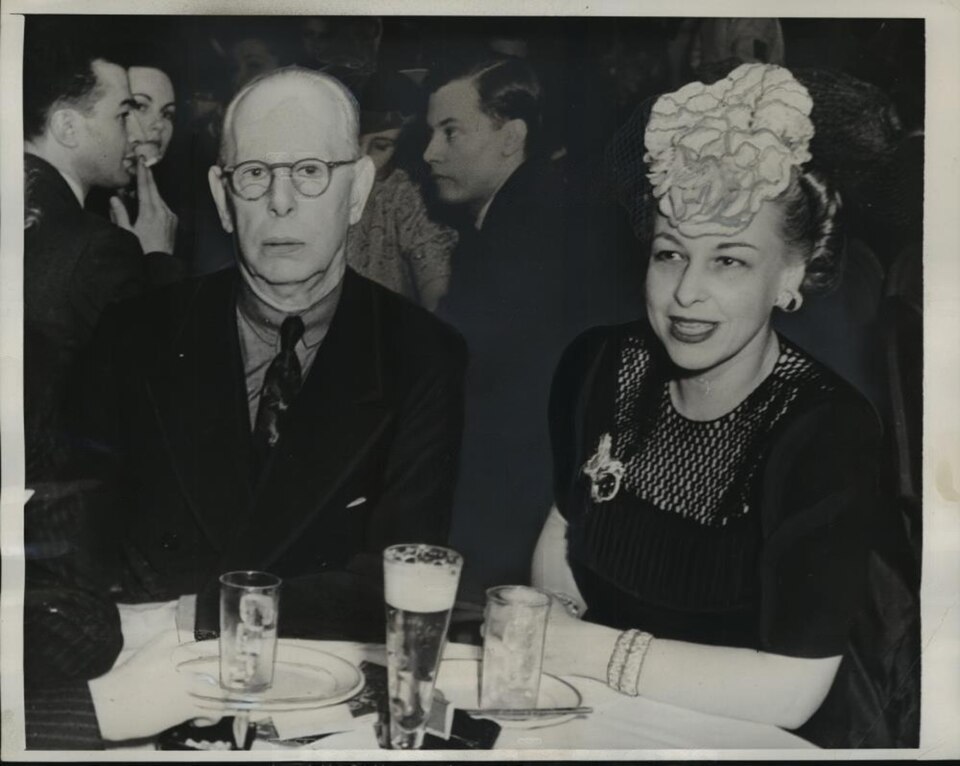
His first job was as a quotation board boy at the brokerage firm Paine Webber, chalking prices onto a large board as they arrived over the ticker tape. Mundane work — but Livermore possessed an unusual numerical memory. He began noticing patterns in the way certain stocks behaved before advancing or declining, the rhythms of supply and demand expressed in that relentless stream of numbers. He recorded his observations in a series of notebooks, building his own system for anticipating short-term price changes.
To test his theories, Livermore turned to Boston's bucket shops — semi-legal establishments where customers wagered on the direction of stock prices without actually executing trades on a real exchange. The bucket shop operator acted as the counterparty to every bet, profiting when customers lost. For a teenager with a few dollars and a theory about price patterns, they offered a low-cost laboratory.
His results were immediate. Pattern-recognition skills gave him a consistent edge in the bucket shops' short-term betting environment, and by the time he was sixteen he had accumulated over $1,000 — a sum that would have taken his father years to earn from farming. By his late teens, his winnings were so consistent that bucket shops across New England began refusing his bets. They recognized him on sight and barred him from their premises. He tried disguises and aliases, but was eventually forced to seek a different arena. "The Boy Plunger" — a nickname born in the bucket shops — followed him to his next destination: the real stock exchanges of New York.
A Painful Education on Wall Street
Livermore arrived in New York around 1899 with approximately $2,500 in bucket shop winnings and supreme confidence in his abilities. He quickly discovered that the skills which made him a legend in the bucket shops did not translate to legitimate exchanges. Bucket shops settled bets instantly at quoted prices. Real exchanges involved execution delays, commissions, slippage between the quoted price and actual fill, and the challenge of moving meaningful amounts of stock without distorting the market.
He lost his entire stake within months. Humiliated, he returned to the bucket shops to rebuild his capital, tried New York again, and lost again. This cycle repeated itself several times between 1899 and 1901 — a searing but instructive period. Livermore came to understand that successful speculation on real exchanges required a fundamentally different approach: instead of betting on minute-to-minute price ticks, he needed to identify major trends and position himself to ride them over weeks or months.
Out of these failures he developed a set of principles that would guide his mature trading career. He learned to wait for what he called the "pivotal point" — a price level at which a stock's behavior confirmed the direction of its larger trend, whether that trend was a continuation or a mean reversion back toward value. He developed strict rules about cutting losses quickly when a trade moved against him, a discipline that many traders preach but few practice. And he came to believe that the market itself was the best source of information — that a trader's job was not to predict the future but to read the present accurately and act decisively on what the tape revealed.
Panic of 1907 and a First Fortune
Livermore's first great opportunity came during the Panic of 1907, one of the most severe financial crises in American history before the creation of the Federal Reserve. In October 1907, a failed attempt to corner the stock of United Copper Company triggered a chain reaction of bank runs and institutional failures. On October 22, the Knickerbocker Trust Company — New York's third-largest trust — collapsed after a run by depositors.
Livermore had been reading the signs of economic weakness for months. Credit conditions were tightening, the British Bank Rate had risen sharply, and speculative excesses in mining stocks and railroad securities had left the market vulnerable. He built a substantial short position in the weeks before the panic and rode it as prices collapsed. By most accounts, he made approximately $1 million during the crisis — equivalent to roughly $30 million in today's purchasing power.
What followed became one of Wall Street's most famous anecdotes. J.P. Morgan himself — personally orchestrating the financial rescue that ultimately halted the panic — reportedly sent an intermediary to ask Livermore to stop selling short. It was not a threat but an appeal: Morgan feared that continued short-selling would deepen the crisis beyond his ability to contain it. Livermore agreed and covered his positions, though whether this account is fully accurate remains debated by historians.
Cotton, Ruin, and the Difficult Middle Years
After the Panic of 1907, Livermore turned to commodities, particularly cotton. In 1908, he accumulated an enormous long position in cotton futures, reportedly controlling such a large share of the available supply that he was effectively cornering the market. His profits were substantial, but the episode drew the attention of President Theodore Roosevelt's administration, concerned about the impact on cotton prices. Livermore was reportedly asked to liquidate his position and complied.
Between 1908 and 1917 his life followed a turbulent rhythm. His trading style — concentrating capital in a few large positions — produced spectacular gains when he was right but crushing losses when he was wrong. He went bankrupt in 1915, owing creditors more than $1 million. This was not the genteel bankruptcy of a businessman with insurance and assets to protect. Livermore had genuinely lost everything.
His recovery demonstrated a quality that set him apart from most speculators: an almost inhuman ability to rebuild from nothing. He persuaded brokers to extend him credit on the strength of his reputation and past performance, then traded his way back to solvency and beyond, using the same methods that had both enriched and ruined him. By 1917, with the United States entering World War I and markets in upheaval, he had rebuilt a fortune estimated at several million dollars.
The Great Crash of 1929
Livermore's defining trade — the one that cemented his legend — came during the stock market crash of October 1929. Throughout the late 1920s, a speculative mania of unprecedented proportions had propelled American stocks upward. Shares were purchased with borrowed money on thin margins, prices bore no relation to underlying earnings, the Federal Reserve had kept interest rates low for much of the decade, and millions of ordinary Americans had been drawn into the market by the promise of easy riches.
Livermore spent the first half of 1929 studying the market's behavior with particular care, observing the classic signs of a speculative top: price advances on declining volume, leading stocks failing to make new highs, and the proliferation of stock tips among people who had never previously owned shares. Beginning in the summer, he quietly built an enormous short position across a broad range of stocks.
When the market broke on October 24 — "Black Thursday" — and then collapsed more severely on October 28 and 29 — "Black Monday" and "Black Tuesday" — Livermore's short positions generated profits estimated at approximately $100 million. Adjusted for inflation, that figure is equivalent to roughly $1.5 billion or more in today's dollars, making him one of the wealthiest people in America at a moment when the rest of the country was plunging into economic disaster.
Triumph came shadowed by public hostility. Short sellers were widely blamed for causing or worsening the crash, and Livermore received death threats that forced him to hire armed bodyguards. Public perception that speculators like Livermore had profited from the nation's misery contributed to the political momentum for financial regulation, including the Securities Exchange Act of 1934 and the creation of the Securities and Exchange Commission.
| Year | Trade | Outcome |
|---|---|---|
| 1901 | Shorted Northern Pacific | Lost everything in corner |
| 1906 | Shorted Union Pacific before earthquake | Profit: ~$250,000 |
| 1907 | Shorted market during Panic | Profit: ~$1 million |
| 1908 | Long cotton, manipulated by Percy Thomas | Lost nearly everything |
| 1915 | Returned to trading after bankruptcy | Rebuilt fortune |
| 1929 | Massive short position before crash | Profit: ~$100 million |
| 1930s | Various trades during Depression | Lost most of 1929 gains |
Trading Philosophy and Published Work
In 1940, Livermore published How to Trade in Stocks, a slim volume distilling decades of experience into a set of principles and a specific trading system he called the Livermore Market Key. It outlined his approach to identifying pivotal points, managing position sizes, and recognizing the psychological traps that destroy most speculators.
Several of his principles have become foundational concepts in technical analysis and trading psychology. "The market is never wrong — opinions are wrong," he wrote. He argued that the most profitable approach was to trade in the direction of the major trend — an intuition now validated by research into systematic trend following — adding to winning positions rather than averaging down on losing ones. He stressed the importance of patience: "There is a time to buy, a time to sell, and a time to go fishing."
Livermore also articulated insights about market psychology that anticipated later academic work in behavioral finance. He recognized that fear and greed drove markets to extremes, that crowds amplified both optimism and panic, and that the same patterns of human behavior repeated across different eras and markets. These observations, expressed in vivid, aphoristic language, help explain why his ideas continue to resonate with traders more than eight decades after his death.
A Tragic End
Despite his analytical brilliance and his repeatedly demonstrated ability to read markets, Livermore could not overcome the personal demons that plagued his later years. After the triumph of 1929, he continued to trade actively, but his judgment faltered. He lost heavily in the volatile markets of the early 1930s — a pattern consistent with the documented link between overconfidence and trading losses. By the mid-1930s, much of his crash fortune had been dissipated through unsuccessful trades, an extravagant lifestyle, and the costs of multiple marriages and divorces.
His personal life was turbulent and often tragic. His second wife, Dorothy, shot and wounded his son Jesse Jr. in a domestic dispute in 1935, though the son survived. His marriages were marked by conflict, extravagance, and instability. Depression — which may have been a lifelong condition — deepened as his financial position deteriorated.
On November 28, 1940, Jesse Livermore entered the cloakroom of the Sherry-Netherland Hotel in Manhattan and took his own life with a pistol. He was sixty-three years old. In his personal effects was a note to his third wife, Harriet: "My dear Nina, Can't help it. Things have been bad with me. I am tired of fighting. Can't carry on any longer. This is the only way out." His estate was valued at approximately $5 million in assets against liabilities that reduced the net value to far less.
Legacy and Enduring Influence
Livermore's reputation rests primarily on a book he did not write. Edwin Lefevre's Reminiscences of a Stock Operator, published in 1923 as a thinly fictionalized account of Livermore's early career — the protagonist is named "Larry Livingston" — became one of the most influential books in the history of financial markets. It has been in continuous print for over a century and remains recommended reading at many trading firms and business schools.
What gives the book its enduring appeal is its vivid depiction of the psychological realities of speculation — the euphoria of winning streaks, the agony of large losses, the constant battle between discipline and impulse. Traders from Paul Tudor Jones to Jack Schwager's Market Wizards interviewees have cited Reminiscences as a formative influence on their careers.
Livermore demonstrated that markets could be read, that trends could be identified, and that disciplined speculation could generate immense returns. He also demonstrated that the temperament required for aggressive speculation — the willingness to risk everything on a conviction — is inseparable from the vulnerability to catastrophic loss. He made and lost multiple fortunes, never finding the equilibrium between the qualities that made him great and the impulses that destroyed him. His suicide note's weary admission — "I am tired of fighting" — was the final statement of a man who had spent a lifetime at war with markets and with himself.
Related
Market Histories Learn more about our methodology.