The Friday Afternoon Closure
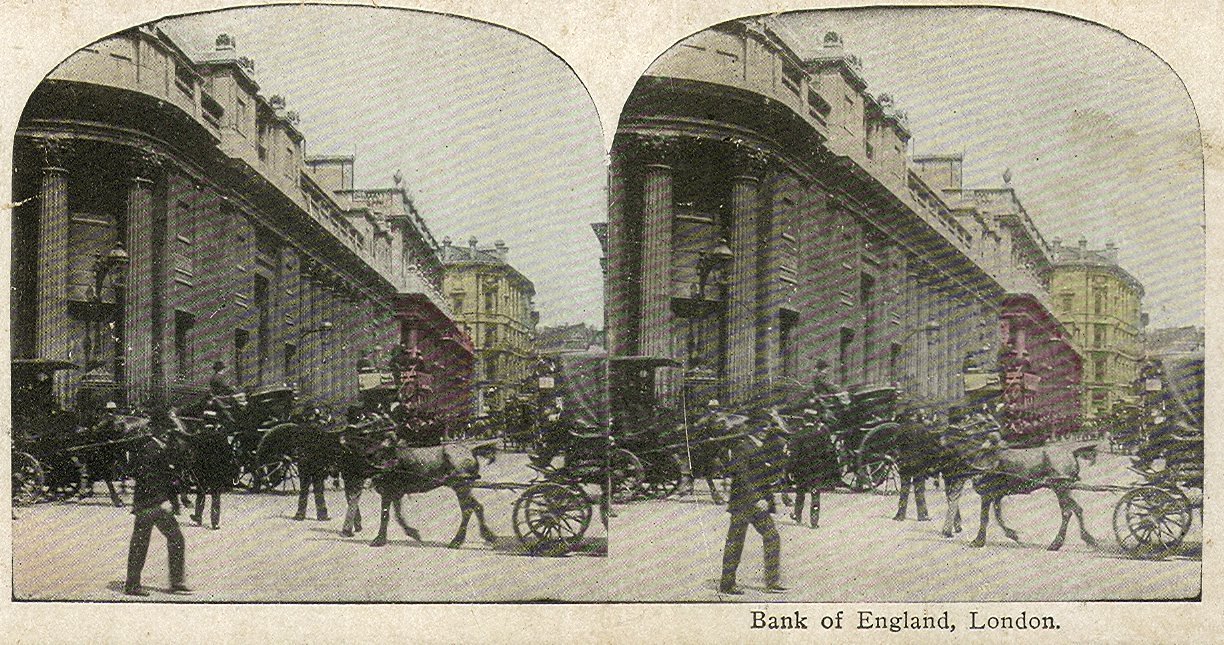
At 1 p.m. London time on Friday 5 July 1991, officers of the Bank of England's Banking Supervision division walked into the Leadenhall Street offices of the Bank of Credit and Commerce International and presented a Section 11 notice under the 1987 Banking Act. The same hour, examiners from the Luxembourg Institut Monétaire opened a parallel proceeding against BCCI Holdings SA, the parent. Within the next ninety minutes regulators in the Cayman Islands, the United States, France, Switzerland, and Spain executed coordinated actions against BCCI subsidiaries on their soil. By the close of business 417 branches in 73 countries had been padlocked, more than a million depositor accounts had been frozen, and the largest multinational bank fraud yet documented was a matter of public record (Truell and Gurwin, 1992).
A press release that the Bank of England issued at 2:30 p.m. was clinical. It noted that the regulators had received a report from Price Waterhouse — BCCI's auditors — describing "evidence of a complex and broad ranging scheme to misrepresent the bank's financial condition." It used the phrase "fraud on a massive scale." It did not yet attach a number. Within six weeks the joint liquidators retained by the Luxembourg court had concluded that the hole in the balance sheet was somewhere between $5 billion and $10 billion against $20 billion in stated assets, and that the gap had been growing for at least fifteen years.
BCCI had operated for nineteen years. Seven national supervisors had each looked at a piece of it. None had seen the whole.
Abedi's Idea
Agha Hasan Abedi was a Pakistani banker, born in Lucknow in 1922, who had spent the 1950s and 1960s building Habib Bank's foreign operations and then, after the 1971 nationalisation of Pakistani banks, had been left without a platform. In 1972 he secured the backing of Sheikh Zayed bin Sultan Al Nahyan, the ruler of Abu Dhabi, and a 25 per cent stake from Bank of America to incorporate a new bank in Luxembourg under the name Bank of Credit and Commerce International. The chosen domicile was deliberate. Luxembourg required no consolidated supervision of the new bank's foreign branches and gave only a thin disclosure regime for shareholders.
Abedi's pitch to his early backers — recorded in internal Bank of America memos later released to the Kerry-Brown subcommittee — was that BCCI would serve the unbanked Muslim middle class in the Gulf, South Asia, and Africa, currencies that Western banks ignored. He raised initial capital of $2.5 million, opened the first London office on Cornhill in late 1972, and added branches in the Gulf at the rate of one per month through 1973 and 1974. The 1973 oil shock landed in his second year of operation. Petrodollar deposits flowed into BCCI from the Gulf in volumes the small bank could not have anticipated, and by 1976 reported assets had crossed $1 billion (Adams and Frantz, 1992).
A structural decision that mattered more than any other came in 1974. Abedi split the bank into two main operating groups — BCCI SA, registered in Luxembourg and notionally supervised there, and BCCI Overseas, registered in the Cayman Islands. Operational management ran out of Karachi. Treasury operations sat in London. Audit was split between Ernst and Whinney for the Luxembourg book and Price Waterhouse for the Cayman book, an arrangement that — as Price Waterhouse partner Tim Hoult later told the Luxembourg court — meant no single auditor ever saw the consolidated picture.
Petrodollars and the First Losses
By 1977 BCCI's reported assets had reached $2.2 billion across 146 branches in 32 countries. The bank had a genuine retail business — Pakistani guest workers in the Gulf wired remittances home through BCCI, and BCCI's branches handled the kind of small-ticket trade finance that the major British and American banks had withdrawn from. It also had something else, which only became clear later. The bank's treasury was running large unhedged positions in foreign exchange and in the gold market, financed by maturity-mismatched short-term deposits. When the 1977 sterling crisis hit, the treasury booked losses that some internal estimates put at $150 million on a capital base of roughly $200 million.
Rather than disclose the loss, Abedi and his deputy Swaleh Naqvi created a fiction. They booked the deficit to a series of nominee loans — credits ostensibly extended to wealthy Gulf families and Pakistani industrialists, but in fact never repaid because the borrowers either did not exist or had been paid to put their names on the documents. The fiction worked because no consolidated audit was ever required. By 1980 the parallel book of nominee loans had grown to roughly $400 million, and by 1985 to $1.5 billion. The conventional commercial bank kept growing alongside the hidden loss, and the gap widened.
Source: BCCI annual reports as compiled by Truell and Gurwin (1992) and the Kerry-Brown Senate Report (1992)
Plotted above are BCCI's reported assets from founding through closure. Estimated true assets — computed by liquidators against the parallel book of nominee loans — diverged from the reported figure by roughly $1 billion in 1980, $4 billion by 1985, and exceeded $10 billion by the July 1991 shutdown. Reported assets rose steadily, and the gap that the audit firms never saw rose with them.
The Black Network
What turned BCCI from an over-leveraged commercial bank into an enforcement target was the parallel business that grew up around the parallel book. By the early 1980s BCCI had built what Time magazine reporters Jonathan Beaty and S.C. Gwynne would later call "the black network" — a unit, separate from the conventional bank's lending desks, that handled flows the conventional bank could not. Arms-sales financing during the Iran-Iraq war moved through BCCI accounts in Karachi and Geneva. Drug-money receipts from the Medellín cartel flowed through Panama City and Miami. Manuel Noriega, the de facto ruler of Panama, kept personal balances of $23 million at BCCI's Panama branch, and the branch handled the bulk of his regime's external transfers. Pakistani intelligence routed funds for the Afghan mujahideen through BCCI accounts in Karachi and London. The Abu Nidal Organization, by the FBI's later reconstruction, used BCCI's Sloane Street branch in London for operational finance (Beaty and Gwynne, 1993).
| Jurisdiction | First regulator concern | Action taken | Year |
|---|---|---|---|
| United States | Bank of America audit flag | Stake sold | 1980 |
| United Kingdom | BoE supervisory letter | None at the time | 1985 |
| Luxembourg | Institut Monétaire query | Audit committee assurance accepted | 1986 |
| United States | Customs Operation C-Chase | Tampa indictment | 1988 |
| Cayman Islands | Price Waterhouse special review | Findings withheld pending Luxembourg | 1990 |
| United Kingdom | Sandstorm Report delivered | Joint closure planning began | March 1991 |
| Seven jurisdictions | Coordinated closure | Branches padlocked | 5 July 1991 |
Bank of America's exit had been a quiet warning. By 1980 internal Bank of America audits had concluded that BCCI's loan book bore no resemblance to a normal commercial portfolio and that the bank's deposit base was being used to finance speculative trading positions rather than commercial lending. Bank of America divested its 25 per cent holding that year at a small loss, taking with it both its directors and its credibility. The directors who replaced them were drawn largely from BCCI's Pakistani management and the Abu Dhabi ruling family. No regulator was notified.
The First American Scheme
In 1978 Abedi had concluded that BCCI needed a US banking presence and that a direct application would never clear the Federal Reserve. He retained Clark Clifford — the former US Defense Secretary, longtime adviser to Democratic presidents, and one of the most respected lawyers in Washington — and Clifford's law partner Robert Altman to engineer a workaround. The vehicle was Credit and Commerce American Holdings, a Netherlands Antilles shell that purchased Financial General Bankshares in stages between 1980 and 1982 and renamed it First American Bankshares. The Federal Reserve approved the change of control on the explicit representation that BCCI would have no role in management.
That representation was false in every material sense. CCAH's nominee shareholders — twelve Gulf investors who fronted the equity — held their stakes on an undisclosed BCCI loan, with Abedi retaining beneficial control through a series of side letters drafted by Altman's office. Clifford and Altman were installed as chairman and president of First American respectively, drawing combined annual compensation that by 1990 exceeded $10 million. The arrangement gave BCCI what no regulator had been willing to give it directly — a US bank holding company with a national branch footprint, through which large dollar transfers could be routed without the receiving counterparty knowing they came from BCCI (Adams and Frantz, 1992).
Kerry-Brown subcommittee staff later described this scheme as the gravest of BCCI's regulatory frauds, because it was directed not at a peripheral supervisor but at the central bank of the United States, and because it relied on the active collaboration of two American lawyers whose reputations made the lie credible.
Operation C-Chase
A first prosecution that pierced BCCI's structure began with a US Customs undercover agent named Robert Mazur posing as a New York investment broker offering Medellín cartel money managers a discreet laundering channel. Operation C-Chase ran from 1986 through 1988 out of a Tampa storefront. Mazur opened accounts at BCCI's Tampa branch in the names of fictitious shell companies, deposited cash that the cartel's couriers had delivered, and watched as BCCI's Panama and Luxembourg branches moved the funds onward. The recordings that came out of the operation included a 1988 dinner in Paris at which BCCI's general manager for Latin America, Amjad Awan, explained the bank's general approach to such customers: "We have a system whereby we take the heat off the customer. The bank does not get involved in the source of the money."
In October 1988 the US attorney in Tampa indicted BCCI as a corporation and nine of its officers on money-laundering charges. The bank pleaded guilty in January 1990 and paid a $14.8 million fine — at the time the largest in US drug-money-laundering history, and entirely insufficient to capture the scale of what the indictment had touched. The plea explicitly accepted that BCCI officers had laundered Medellín money through Tampa, but the broader US investigation was constrained by the absence of consolidated records and by what the Kerry-Brown report would later describe as active obstruction by BCCI's UK and Luxembourg lawyers.
Tampa mattered most because it gave the Federal Reserve a basis to begin examining the BCCI-CCAH-First American chain. The supervisory record from late 1988 onward shows the Fed's general counsel, Virgil Mattingly, expanding the scope of inquiry month by month, eventually concluding in 1990 that BCCI did indeed control First American through nominees and referring the matter to the Department of Justice and to New York district attorney Robert Morgenthau, whose office would later bring the most consequential criminal indictments.
The Sandstorm Report
In April 1990 BCCI's auditors split. Ernst and Young had taken over the Luxembourg audit from Ernst and Whinney that year and had refused to sign off on the prior year's accounts without further work on the loan book. Price Waterhouse, the Cayman auditor, was at the same time conducting what became known internally as Project Sandstorm — a confidential review commissioned by BCCI's audit committee at Sheikh Zayed's instruction, after rumours of large irregularities had reached Abu Dhabi. The Sandstorm partners, working from Price Waterhouse's London office, gradually reconstructed the parallel book.
Their March 1991 report ran to roughly 350 pages. It concluded that BCCI had never been a profitable bank in any year since 1976, that reported profits had been manufactured through nominee loans, treasury frauds, and outright fictitious entries, and that the cumulative undisclosed losses were of an order that exceeded the bank's stated capital several times over. The report quoted internal BCCI memoranda in which Abedi and Naqvi had directed specific nominee transactions, and it identified at least 1,200 individual nominee accounts representing concealed exposures. The Sandstorm Report was delivered to the Bank of England, the Luxembourg Institut Monétaire, and the Federal Reserve under conditions of secrecy in late March and April 1991, and it became the operative document for the closure planning that followed (Beaty and Gwynne, 1993).
Depositor Pain
From a supervisory perspective the closure that the Bank of England coordinated on 5 July 1991 was clean. From a depositor perspective it was ruinous. BCCI's 1.4 million account holders included a disproportionate share of small depositors in countries with no insurance scheme — Pakistani factory workers in the Gulf, traders in Lagos and Khartoum, the Western Isles Council of Scotland, which had placed nearly £24 million of public funds with BCCI's Luxembourg book and lost roughly half. The largest single concentrated loss fell on Bangladesh, where BCCI had been the principal bank for the country's expatriate remittance flows.
| Country | Approximate depositor loss ($m) | Recovery rate as of 2010 |
|---|---|---|
| United Kingdom | 590 | 90 per cent |
| United Arab Emirates | 1,200 | 75 per cent |
| Pakistan | 600 | 60 per cent |
| Bangladesh | 250 | 55 per cent |
| Hong Kong | 400 | 70 per cent |
| Western Isles, Scotland | 33 | 70 per cent |
| Other depositors (combined) | 6,800 | 65 per cent |
Eventual recoveries — totalling roughly 75 per cent of admitted depositor claims by 2012, twenty-one years after closure — came from three sources. Abu Dhabi, as 77 per cent shareholder by 1991 and as the entity that had supplied the bank's underlying capital, settled in 1995 for $1.8 billion. Price Waterhouse and Ernst and Young, as joint defendants in the auditors' negligence litigation, settled in 1998 for a combined $175 million, with a further round bringing the auditor recoveries above $500 million by 2007. And the Tampa forfeiture proceedings, the New York district attorney's racketeering settlement, and the federal restitution orders contributed an additional $700 million in recoveries to the liquidation pool.
Aftermath in Washington
In Washington the political consequences ran on a longer clock than the financial liquidation. Robert Morgenthau's office in Manhattan indicted Clark Clifford and Robert Altman on state racketeering charges in July 1992. The federal indictment followed a month later. Both men maintained that they had been deceived by Abedi about BCCI's true relationship with First American. Clifford, then 85 and frail, was severed from the trial on medical grounds and was never tried — he died in 1998 with the case unresolved. Altman was tried in New York in 1993 and acquitted on all counts after a fourteen-week trial in which prosecutors could not show that Altman had known of the nominee structure beyond what BCCI documents represented. The acquittal was, as the Wall Street Journal observed in its trial report, "a verdict on the prosecution's evidence rather than a vindication of the conduct" (Truell and Gurwin, 1992).
Agha Hasan Abedi himself was indicted by the United States and the United Kingdom but never tried. He had suffered a series of heart attacks in 1988 and had effectively retired from active management before the closure. Pakistan refused extradition. He died of heart failure in Karachi on 5 August 1995, aged 73, with the indictments outstanding. The same week the Wall Street Journal published an obituary that began: "Agha Hasan Abedi, who used a vision of pan-Islamic banking to assemble the largest fraud in financial history, died yesterday in Karachi without facing his accusers."
What the Regulators Built Afterwards
BCCI's most lasting consequence was structural. The Basel Committee on Banking Supervision met in special session in November 1991 and again in February 1992 and produced, in July 1992, the document titled Minimum Standards for the Supervision of International Banking Groups and Their Cross-Border Establishments. The four standards required that every cross-border banking group have an identifiable home supervisor, that the home supervisor be capable of consolidated review of the group, that host supervisors gain consent of the home before licensing a foreign establishment, and that supervisors be able to obtain information from each other to perform consolidated supervision. The framework — which became the operative international standard for the next two decades — was BCCI's epitaph in regulatory form.
In the United States the Foreign Bank Supervision Enhancement Act passed in December 1991 as Title II of the FDIC Improvement Act. It gave the Federal Reserve authority to approve, examine, and terminate any foreign bank's US operations, ended the patchwork in which different US states had licensed BCCI agency offices independently, and required that every foreign bank operating in the United States be subject to comprehensive consolidated supervision in its home country. Similar legislation followed in the United Kingdom, where the Banking Act 1987 was amended to give the Bank of England — and later the Financial Services Authority — broader powers to refuse a banking license on consolidated-supervision grounds.
For comparable studies of how concealed losses scaled into systemic events, the collapse of Barings Bank in 1995 demonstrated the same back-office failure mode that BCCI had exploited at branch scale. The Madoff Ponzi scheme and the Enron accounting fraud extended the same lesson — that long-running fictions in audited financial statements depend on auditor fragmentation as much as on auditor inattention. The LIBOR rate-rigging scandal showed how a different gap in cross-border supervision allowed coordinated misconduct to persist across multiple jurisdictions.
A Karachi Funeral
When Abedi was buried in Karachi on 6 August 1995, a small group of former BCCI executives attended. Sheikh Zayed sent a private representative. Clark Clifford, who had once stood next to Abedi at First American board meetings in Washington, sent no message. The cemetery clerk recorded the burial as that of a private citizen. The bank Abedi had built had been gone for four years. The last branch — the Karachi head office on Chundrigar Road, where Abedi had received Sheikh Zayed's first equity contribution in 1972 — had been turned into a liquidation centre, with creditors arriving each morning to file their claims and a single uniformed guard at the door whose responsibility was no longer to admit customers but to prevent them from entering.
Related
Historical records Learn more about our methodology.