The Weekend That Changed Everything
Camp David sits in the Catoctin Mountains of Maryland, about 70 miles north of Washington, a cluster of lodges and meeting rooms surrounded by woods and guarded by Marines. In August 1971, it was the setting for one of the most consequential economic decisions in modern history — a secret weekend gathering that ended a 27-year monetary order without consulting a single foreign government.
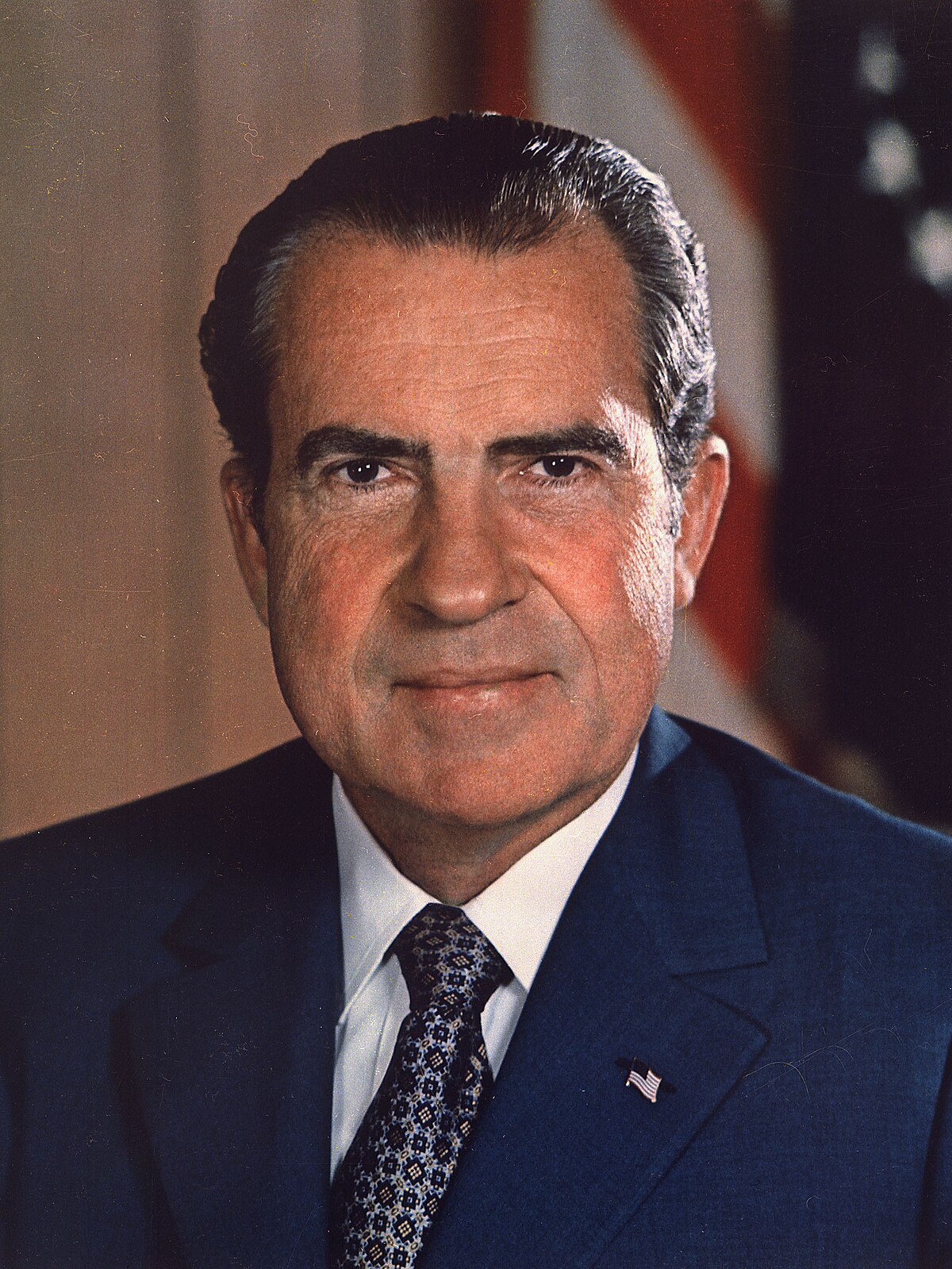
On Friday, 13 August 1971, a small group of men arrived by helicopter. President Richard Nixon. Treasury Secretary John Connally, a forceful Texas politician with a taste for blunt action. Paul Volcker, then Under Secretary of the Treasury for Monetary Affairs, a tall economist who chain-smoked and had spent years watching the Bretton Woods system grind toward crisis. Federal Reserve Chairman Arthur Burns, an economist of the old school who had spent months resisting the political pressures bearing down on him. And a handful of others — economic advisors, speechwriters, a small circle sworn to secrecy.
Nobody knew they were there. The plan was to keep it that way until Sunday night.
An Architecture Already Crumbling
To understand what happened at Camp David, you have to understand the system it destroyed. The Bretton Woods agreement of 1944 had created a gold-exchange standard: the US dollar was fixed to gold at $35 per troy ounce, and every other major currency was pegged to the dollar. In theory, any foreign central bank holding dollars could present them to the US Treasury and receive gold in exchange. The dollar was, in the language of the era, "as good as gold."
For most of the 1950s and 1960s, the system worked. American industry dominated the world, the dollar was genuinely scarce, and the gold peg was not seriously tested. But the arithmetic that Belgian-American economist Robert Triffin identified in 1960 was always present: for world trade to grow, more dollars had to circulate globally, which meant the US had to run balance-of-payments deficits. Eventually, those accumulated dollar claims would exceed the gold reserves backing them. When that happened, the system's credibility would be gone (Triffin, 1960).
By 1971, it was gone. US gold reserves had fallen from $24.4 billion at their peak in 1948 to just $10.2 billion. Foreign official dollar holdings exceeded $50 billion — five times the gold available to redeem them. The gap was not a rounding error. It was a chasm.
Vietnam, the Great Society, and the Dollar Glut
Two major forces had driven the dollar into this position. The first was war. President Lyndon Johnson had decided to fight in Vietnam without raising taxes significantly, financing the conflict through deficit spending and Federal Reserve accommodation. Annual defence spending rose from roughly $51 billion in 1965 to $82 billion in 1968. The resulting monetary expansion pushed inflation from under 2% in 1965 to 5.9% by 1969, eroding the purchasing power of every dollar held abroad (Bordo and Eichengreen, 1993).
The second force was the Great Society. Johnson's ambitious domestic programs — Medicare, Medicaid, federal education funding, the War on Poverty — added tens of billions in annual expenditure at precisely the moment when military costs were surging. The result was a classic guns-and-butter problem, with the guns and butter both charged to the world's reserve currency.
Foreign central banks noticed. In Paris especially, the mood was one of mounting anger. President Charles de Gaulle had been saying for years that American monetary policy amounted to an abuse of the dollar's privileged position. His finance minister, Valéry Giscard d'Estaing, gave the abuse a name: the "exorbitant privilege." The United States, by Giscard d'Estaing's analysis, could pay for imports, wars, and investments abroad simply by printing more of a currency that the rest of the world was obligated to accept as reserves. No other country enjoyed that luxury. France began converting its dollar reserves into gold with conspicuous deliberateness — a calculated political signal as much as a financial decision.
Between 1965 and 1971, France, West Germany, and other European nations collectively drained hundreds of tonnes of gold from Fort Knox. The French were the most aggressive. De Gaulle sent aircraft to the United States to bring gold back physically. The symbolism was not lost on Washington.
The Exorbitant Privilege Under Siege
By the spring of 1971, currency markets had grown openly skeptical. West Germany, facing a flood of dollars that threatened to import American inflation, let the Deutsche Mark float in May — effectively breaking ranks with Bretton Woods unilaterally. Switzerland followed. Speculative pressure mounted against the dollar through the summer.
Then, on 6 August 1971, a congressional subcommittee report landed like a grenade in Washington: the United States was running a trade deficit for the first time in the twentieth century. The news was not entirely surprising — the trend had been building for years — but the symbolism was devastating. The world's leading industrial power was now importing more than it exported.
Connally had seen enough. A pragmatist with no sentimental attachment to the architecture of 1944, he told Nixon the situation was unsustainable and that unilateral action was the only realistic option. Volcker, more cautious by temperament, agreed that something had to be done but worried about the international fallout. Burns argued for restraint. The debate that weekend at Camp David was not really about whether to act. It was about how dramatic to be.
Sunday Night, 9 PM
Nixon made his decision on Sunday afternoon. That evening, he pre-empted the popular television program Bonanza to address the nation at 9 PM. The speech lasted fifteen minutes.
Three measures, he announced. First, the United States was immediately suspending the convertibility of the dollar into gold or other reserve assets. The gold window — the mechanism through which foreign central banks could exchange dollar reserves for gold — was closed. Second, a 90-day freeze on all wages and prices to arrest inflation directly. Third, a 10% surcharge on all imports to strengthen the US trade position.
Nixon framed all three as temporary emergency measures. He invoked the specter of international speculators attacking the dollar. He promised that the actions would make the dollar "the bedrock of monetary stability." He did not mention Bretton Woods by name. He did not explain to the American public — or to the allied governments who learned of the decision from news reports, hours after the broadcast — that the monetary system underpinning global trade for 27 years had just been abolished.
The allied reaction was fury. European finance ministers, woken in the middle of the night by urgent phone calls, found themselves confronting a fait accompli. Japan, which had rebuilt its entire post-war export economy around dollar stability, was particularly stunned. Tokyo had not been consulted. Neither had London, Bonn, or Paris. Connally, asked about foreign government objections, reportedly shrugged: the dollar was America's currency but everyone else's problem.
The Market Reacts
Wall Street's initial response confounded many observers. On Monday, 16 August 1971, the Dow Jones Industrial Average surged 32.9 points — the largest single-day point gain in its history to that date. Traders and investors heard "wage and price freeze to fight inflation" and liked what they heard. The deeper implications — a world monetary system in free fall, inflation pressures that would soon overwhelm any 90-day freeze — took longer to price in.
Gold markets, where they were still open, told a different story. The London gold market closed immediately to prevent a speculative rush. When it reopened, gold began its long climb away from $35.
The Smithsonian: A Truce, Not a Settlement
Over the following months, the Nixon administration engaged in frantic diplomacy to patch together a new fixed-rate arrangement. Connally, negotiating with uncommon bluntness, essentially told US allies that they would accept a dollar devaluation or face the import surcharge indefinitely. In December 1971, eighteen nations signed the Smithsonian Agreement at the Smithsonian Institution in Washington. The dollar was devalued to $38 per ounce of gold, other currencies were revalued upward, and the permissible fluctuation bands were widened from 1% to 2.25%.
Nixon called the Smithsonian Agreement "the greatest monetary agreement in the history of the world." The claim aged poorly. By the spring of 1973, speculative attacks had overwhelmed the new rates. The major currencies began floating freely against each other. The system that Nixon called temporary had lasted barely 14 months.
| Agreement | Date | Dollar/Gold Rate | Outcome |
|---|---|---|---|
| Bretton Woods | 1944 | $35/oz | Fixed rate system for 27 years |
| Smithsonian Agreement | Dec 1971 | $38/oz | Collapsed March 1973 |
| Full Float Begins | March 1973 | Market-determined | Persists to present day |
The Inflation Consequence
The inflationary aftermath was severe and took years to fully manifest. US consumer price inflation, running at 3.3% in 1971, rose to 8.7% in 1973 and reached 12.3% in 1974 — accelerated by the oil shock that followed the Yom Kippur War of October 1973. The combination proved nearly irresistible: a dollar no longer anchored to gold, oil prices quadrupled by an OPEC embargo, and a Federal Reserve that was slow to tighten policy in the face of political pressure.
What had begun as an attempt to reduce unemployment and boost growth ahead of Nixon's 1972 re-election campaign instead unleashed a decade of stagflation — high inflation coexisting with high unemployment — that confounded Keynesian economists who had argued the two could not occur simultaneously. Arthur Burns, under sustained pressure from the White House not to tighten policy, found himself blamed for a monetary catastrophe he had partially tried to resist.
Paul Volcker watched all of this with growing alarm. He had been in the room at Camp David. He had helped construct the arguments for closing the gold window. And for the rest of the decade, as inflation metastasized into a structural feature of the American economy, he would think hard about the price of that decision. When he became Federal Reserve Chairman in 1979, he administered the bitter medicine the Nixon Shock had made necessary — a brutal campaign of interest rate increases, with the federal funds rate ultimately reaching 20%, that crushed inflation but also triggered the deepest recession since the Great Depression.
Winners, Losers, and the New Order
Not everyone suffered in the post-Bretton Woods era. Gold holders saw spectacular gains — the metal that had been frozen at $35 per ounce for nearly three decades reached $589 per ounce by January 1980, a 1,583% increase in under a decade. Commodity exporters benefited from dollar-denominated price increases. Real estate and other hard assets outperformed financial assets through much of the 1970s.
The losers were primarily the countries that had structured their economies and monetary systems around dollar stability. Many developing nations had taken on dollar-denominated debt at what seemed like manageable terms; the combination of dollar weakness, rising inflation, and eventual sharp tightening produced debt crises across Latin America in the early 1980s.
What replaced Bretton Woods was not, strictly speaking, a system at all — at least not a designed one. It was an emergent arrangement centered on a new mechanism for dollar recycling: the petrodollar. When OPEC quadrupled oil prices in 1973 and the world was forced to pay for energy in dollars, vast surpluses accumulated in Gulf state treasuries. Those surpluses flowed into US Treasury securities, creating an enormous demand for dollar-denominated assets that helped sustain American borrowing costs. The dollar had lost its gold anchor but found a hydrocarbon one instead.
Reserve currency status, which many analysts had expected the Nixon Shock to destroy, proved remarkably durable. Europe struggled to create a credible alternative — the path from the European Monetary System through the Exchange Rate Mechanism and eventually to the euro was long and punctuated by crises. Japan's yen never achieved global reserve status. The dollar's network effects — in trade invoicing, debt markets, and central bank reserves — proved self-reinforcing in ways that even its advocates had not fully anticipated.
Volcker's Long Reckoning
Paul Volcker spent much of the rest of his career wrestling with the consequences of what had been decided in those Maryland mountains. His memoir, published decades later, describes the Camp David weekend with a mixture of professional satisfaction at solving an immediate crisis and honest acknowledgment of the disorder that followed. He had known that closing the gold window would unleash inflationary pressure. What he had not fully anticipated was how long it would take for monetary discipline to re-emerge, or how costly the restoration of that discipline would eventually be.
The Volcker disinflation of 1979–1982 — a story told in detail in its own right — was, in a real sense, the delayed reckoning for the choices made on a summer weekend in Maryland. The 20% interest rates. The 10.8% unemployment. The political firestorm. All of it traced back, in a chain of causation that economists have spent decades mapping, to a 15-minute television address and the decision to close a window through which gold had flowed for more than a quarter-century.
The Dollar Standard
What emerged from the rubble of Bretton Woods was something new in monetary history: a global reserve currency with no commodity anchor at all. The "dollar standard" that replaced the gold-exchange standard rested entirely on political confidence — confidence in American institutions, in the depth and liquidity of US financial markets, in the willingness and ability of the Federal Reserve to maintain price stability over time.
That confidence was tested severely in the 1970s. It was restored, at great cost, in the early 1980s. It has been tested again, repeatedly, in the decades since — by fiscal deficits, by financial crises, by geopolitical shifts. Each time, the dollar has remained, if sometimes uneasily, at the center of the global monetary order.
Nixon's Sunday night speech was not a beginning. It was an ending — the end of a system designed by Keynes and White in 1944, worn down by the weight of American imperial expenditure, and finally dissolved in fifteen minutes of prime-time television. But endings in monetary history are never clean. The system that replaced Bretton Woods was improvised, contested, and never formally agreed upon. It has outlasted most of its critics' predictions. Whether it will outlast its structural contradictions remains, more than fifty years on, an open question — one that every central banker alive today has inherited from the men who spent that August weekend in the Maryland woods deciding the fate of the global economy.
The gold window never reopened. It was never meant to.
Related
Historical records Learn more about our methodology.