Dinner at the Bretton Woods Committee
At about nine in the evening on Friday 10 March 1989, in the ballroom of the Sheraton Washington Hotel on Connecticut Avenue, the Bretton Woods Committee — a private organisation of bankers and former officials founded in 1983 to defend the multilateral institutions — held its annual dinner. The keynote speaker was Nicholas F. Brady, who six weeks earlier had stayed on as Treasury Secretary under the new Bush administration. Brady was a courtly Wall Street lawyer from Dillon, Read & Co with a New Jersey Senate seat in his recent past and a reputation, among the bankers in the room, for listening longer than he spoke. That evening he spoke for twenty-two minutes. By the time he sat down he had retired the central premise on which seven years of crisis management had rested.
"The path toward greater creditworthiness and a return to the markets for many debtor countries needs to involve debt reduction," Brady told the dinner — a sentence that to a non-specialist sounded merely cautious, but that the room understood as a public funeral for the doctrine that Latin American bank loans of the 1970s would one day be paid back at par. By the closing remarks the floor had a quiet, slightly stunned quality. Two officials who were present later told historians the same thing — they realised the speech had moved an entire policy line in a single sitting, and that the question of who would now bear the loss had moved with it (Boughton, 2001).
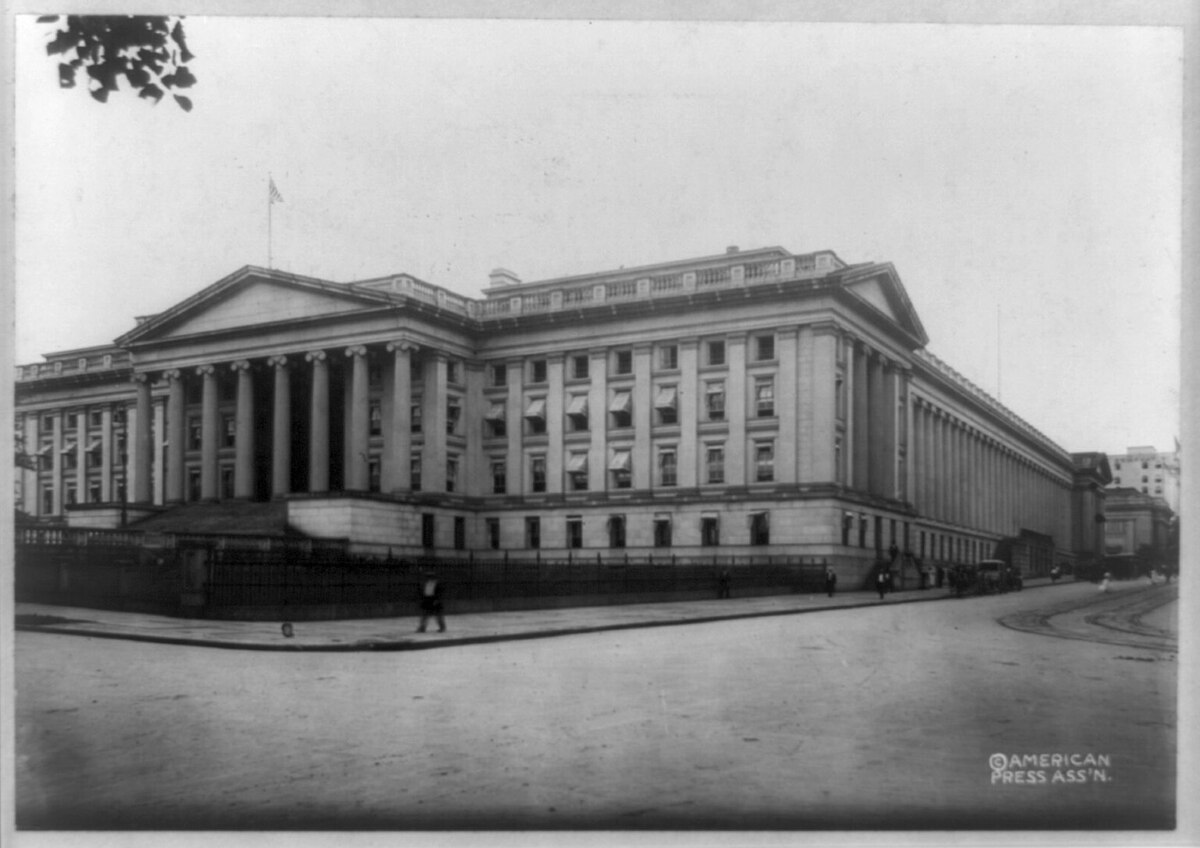
Seven Years of Baker, Two Years Too Many
To see why the Brady speech mattered, you have to look back at the long ledger of Mexico's August 1982 weekend — when Finance Minister Jesús Silva Herzog flew to Washington to tell Paul Volcker and Don Regan that Mexico could not meet its next $1 billion payment — and at the seven years of stalemate that followed. The arithmetic of that opening crisis is laid out in detail in our piece on the Latin American debt crisis and Mexico's 1982 moratorium. The short version is that nine US money-centre banks held Latin American claims equal to roughly 180 percent of their consolidated capital in 1982. To recognise the real value of those claims at the secondary-market prices of 1983 would have made several of them technically insolvent. So for three years the response was triage. Treasury, the IMF and the Federal Reserve organised concerted rescheduling packages that lengthened maturities, attached IMF programmes to fresh disbursements, and kept the book value of every claim at one hundred cents on the dollar. The architect of that strategy on the official side, more than any other person, was Volcker — whose earlier campaign against inflation is treated in the Volcker shock and the global cost of breaking the price spiral.
By 1985 the strategy had bought the banks time and bought the debtors very little. Real per-capita income in the seven largest Latin American economies had fallen by an average of 8 percent between 1981 and 1985. Inflation in Brazil had passed 200 percent. Capital flight from Argentina, Mexico and Venezuela between 1979 and 1985 was estimated by Morgan Guaranty at roughly $130 billion — close to half of the region's gross external debt. Into that situation came James Baker, who in October 1985 used the IMF–World Bank annual meetings in Seoul to announce what became known as the Baker Plan. The plan called on commercial banks to extend $20 billion in new lending to fifteen heavily indebted countries over three years, with the World Bank and IDB providing another $9 billion, in exchange for market-friendly structural reforms. The bargain was simple — growth would, eventually, allow the original debts to be serviced in full.
It did not work. Net new commercial bank lending to the fifteen Baker countries between 1985 and 1988 was, on most reckonings, close to zero in nominal terms and sharply negative in real terms (Sachs, 1989). Banks unwilling to mark down their existing positions were equally unwilling to add to them. Secondary-market quotes for Latin American syndicated loans drifted down through 1986 and 1987 and by late 1988 a Citicorp loan to Argentina was trading in the high twenties of cents on the dollar, a Bolivian claim in the low teens. Citicorp's John Reed broke the dam on 19 May 1987 by announcing a $3 billion increase to the bank's loan-loss reserves against developing-country exposure, taking a $2.5 billion second-quarter charge and rolling the rest into capital. Within six weeks Chase, Manufacturers Hanover and Bankers Trust had matched him. The fiction of par accounting on the banks' own balance sheets — the foundation of the entire Baker edifice — collapsed in a single quarter.
What the Secondary Market Knew
By the time of Brady's March 1989 speech the secondary market in distressed sovereign loans had grown from a thin, telephone-broker affair into a genuine market with dealers, mid-prices and a recognisable term structure. The mid-quotes traded by Salomon Brothers, Citicorp, J.P. Morgan and a half-dozen specialist boutiques in mid-March 1989 gave a clean read on what private capital believed each country was actually worth.
Source: World Bank, Global Development Finance 1996; IDB, Economic and Social Progress in Latin America
The chart is the simplest way to read the Brady transition. From 1982 to 1987 total external debt for the region rose almost without interruption while real income fell — the textbook signature of debt overhang. Net resource transfers (new lending minus principal and interest paid out) had turned negative in 1982 and stayed negative through every year of the Baker period, running between minus $20 billion and minus $35 billion annually. The economist Paul Krugman had formalised the mechanism in a 1988 paper, showing that when a country's expected debt service exceeds its expected capacity to pay, every additional dollar of debt actually reduces both the value of existing claims and the country's incentive to invest in production — a debt Laffer curve in which write-downs raise the market value of the remaining claim (Krugman, 1988). The Brady Plan was, in effect, an institutional implementation of that finding.
The Speech and the Mechanism
Brady's address itself was short on numbers and long on principle. The four points it set out — voluntary debt and debt-service reduction, IMF and World Bank financial support for the operations, the relaxation of IMF "negative pledge" requirements so that fresh money was not blocked, and the encouragement of debtor-country reforms — were the public skeleton. The mechanism was assembled in the weeks afterwards by Treasury's David Mulford, the IMF's Jacques Polak working group, and a small team at the Federal Reserve Bank of New York. The instrument they produced — what within months everyone in the New York and London capital markets simply called a Brady bond — had three components.
The first was the menu. Each creditor bank in the syndicate chose, claim by claim, between options. The two anchors were a discount bond, in which old debt was exchanged at roughly 65 cents on the dollar for a new 30-year instrument with a floating rate close to the original LIBOR margin, and a par bond, in which old debt was exchanged at face value for a new 30-year bond carrying a fixed below-market coupon — usually in the area of 6 to 6.25 percent. A third option, the new-money window, allowed banks to refuse reduction in return for committing fresh capital, an alternative most of the smaller European houses preferred in order to avoid taking a recognised loss. The discount and par options reduced the present value of bank claims by broadly comparable amounts — somewhere between 30 and 35 percent in the typical deal — but they did it through different parts of the cash-flow profile, which mattered for the banks' tax and accounting treatment.
The second component was the collateral. Principal on every new bond was secured by a US Treasury 30-year zero-coupon strip purchased at issue, sized to mature at face value on the redemption date. Interest was guaranteed for a rolling 12 to 18 months — typically by AAA-rated securities or by escrow deposits at the New York Fed. The collateral was financed by an IMF stand-by arrangement, a World Bank single-currency loan, a parallel disbursement from the Japan Eximbank, and the debtor's own foreign reserves, in a proportion that varied case by case. The aggregate cost to the official creditors was reasonable — the principal collateral on a $30 billion exchange might run $5 to $7 billion in present-value terms, a fraction of the implicit subsidy of the Baker-era reschedulings.
The third component was the legal architecture. Brady bonds were governed by New York law, listed in Luxembourg, eligible for clearing through Euroclear and Cedel, and — critically — structured as bearer or registered bonds rather than as syndicated loans. They could be sold, in lots as small as $250,000 face, by any holder without the consent of the other syndicate members. That single design choice converted what had been an illiquid private contract among 600 banks into a tradeable security accessible to insurance companies, mutual funds and, before long, retail buyers. It was the legal innovation, more than the haircut, that made Brady bonds the founding instrument of the modern emerging-market sovereign bond asset class.
The Mexico Deal and the Seven Pioneers
Mexico signed the first agreement-in-principle on 22 July 1989 and the final restructuring agreement on 4 February 1990. Forty-eight billion dollars of eligible bank claims were exchanged for a combination of discount bonds (with a 35 percent principal reduction), par bonds (with a 6.25 percent fixed coupon), and new money. The official-sector collateral package — roughly $7 billion in present-value terms — was assembled from the IMF, the World Bank, Japan and Mexico's own reserves. Net debt reduction in present value was estimated by the IMF at roughly $14.5 billion, or about 30 percent of eligible claims.
| Country | Deal date | Eligible bank debt (US$bn) | Brady bonds issued (US$bn) | Principal collateral |
|---|---|---|---|---|
| Mexico | February 1990 | 48.0 | 35.6 | US Treasury 30-yr zero-coupon |
| Costa Rica | May 1990 | 1.6 | 0.6 | US Treasury 30-yr zero-coupon |
| Venezuela | December 1990 | 19.7 | 18.1 | US Treasury 30-yr zero-coupon |
| Uruguay | February 1991 | 1.6 | 1.2 | US Treasury 30-yr zero-coupon |
| Nigeria | January 1992 | 5.8 | 2.0 | US Treasury 30-yr zero-coupon |
| Philippines | December 1992 | 4.5 | 3.4 | US Treasury 30-yr zero-coupon |
| Argentina | April 1993 | 21.0 | 25.0 (incl. past-due interest) | US Treasury 30-yr zero-coupon |
Costa Rica chose a different path within the same framework — a cash buyback at 16 cents on the dollar funded almost entirely by official money, retiring about two-thirds of its commercial bank claims outright. Venezuela in 1990 offered five options on the menu, including a temporary-interest-reduction bond that suited Japanese banks under their domestic accounting rules. Argentina in April 1993 used the architecture to clear $8 billion of past-due interest accumulated since its 1988 moratorium, packaging it into Floating Rate Bonds (FRBs) that traded in their own right within weeks of issue.
The Asset Class That Followed
Within eighteen months of the Mexico signing, the Brady bond market had developed a daily turnover of roughly $300 million and a recognisable yield curve. Salomon Brothers' Emerging Market Bond Index (the EMBI), launched in 1992 with Brady bonds as its founding constituents, became the benchmark against which every subsequent emerging-market fixed-income product would be measured. Aggregate Brady issuance across 17 sovereigns between 1989 and the last principal restructuring in 1997 came to roughly $160 billion in face value, representing a present-value reduction of about $60 billion against the original bank claims (Cline, 1995).
Two arithmetic surprises followed. The first was that the bonds rallied — partly because Mexican growth turned positive in 1991, partly because the zero-coupon collateral effectively created a floor on principal repayment, and partly because the new investor base bid for paper that the original banks were eager to sell. Mexican par bonds issued at 65 in 1990 traded above 90 by early 1994. The second surprise was the speed with which sovereigns began to refinance Brady debt with conventional Eurobonds. Mexico tapped the international bond market in June 1990 — its first private sovereign borrowing in eight years — with a $100 million Samurai issue and followed with dollar Eurobonds in 1991. By the late 1990s most Brady issuers were buying back their bonds in the open market or exchanging them for unsecured Eurobonds at a discount to face. The asset class had built the market that then competed it away.
The first sovereign Brady-era default came not from Latin America but from Ecuador, which on 30 September 1999 became the first country to default on a Brady bond. The peso turbulence of 1994-1995, treated in the Mexican peso crisis and the Tequila Effect, had already tested Brady bond pricing without producing defaults — the Mexican par bond fell from above 90 to the mid-50s between December 1994 and March 1995 before recovering on the back of the US-led rescue package. By 2007 most outstanding Brady paper had been retired or refinanced. The Philippines redeemed its last Brady bond in 2008, Mexico in 2003, and Argentina swept its remaining Brady issues into the 2005 post-default restructuring.
What Brady Bequeathed
The institutional legacy is in three pieces. The first is the doctrinal acceptance that sovereign debt does not always trade at par — a point so obvious to a 2025 reader that it is hard to recall how heretical it sounded in 1988. The second is the modern emerging-market debt asset class, with its dedicated investor base, its EMBI benchmark, and its now-routine recourse to international bond markets. The third is the operating template — collective-action clauses, menu choices, official-sector credit enhancement — that has been redeployed in every major sovereign restructuring since, from the Russian GKO exchange of 2000 to the Argentine megaswap of 2005 and the Greek private-sector involvement (PSI) of 2012, the latter treated at greater length in our piece on the Greek debt crisis and the eurozone sovereign-debt rupture.
The doctrinal change was the hardest of the three. The IMF's official history records that for at least three years after the Brady speech, individual staff members continued to draft programme documents on the assumption that par was the appropriate benchmark for the present value of outstanding claims — a habit of thought that ran against the new policy and that took until roughly 1992 to disappear (Boughton, 2001). Edwin Truman, then director of the international finance division at the Federal Reserve, observed in 1996 that the Brady transition had effected "the largest single shift in the public-sector view of sovereign default risk since Bretton Woods" — and that the shift had occurred so quietly because nobody in Washington wanted to call it what it was (Truman, 1996).
Brady himself left Treasury in January 1993 and returned to private banking. Mulford, the Assistant Secretary who had drafted the operating mechanism, left at the same time. By the early 2000s the institutional memory of how the deals had actually been structured was carried by a small group of veteran sovereign-debt lawyers and a handful of IMF career staff. When the same architecture was wheeled out for Greece in 2011-2012 — and again, in modified form, for the G20 Common Framework agreed in November 2020 — the operating logic was twenty-two years old and the original draftsmen were mostly retired. The bond that sat in escrow at the Federal Reserve Bank of New York on 28 March 1990, secured by a US Treasury zero-coupon strip maturing on 31 December 2019, paid out in full on its scheduled date. The country whose obligation it had once been was, by then, an investment-grade issuer.
Related
Historical records Learn more about our methodology.